
Start with the protected conclusion

What evidence would actually make you change your mind? A specific answer tells us something about how your belief works. “Nothing” tells us something too. If every possible result must be interpreted as confirmation, the conclusion has been protected before the investigation begins.
You don't get to reject every result that contradicts your belief and then claim your belief survived scrutiny. That's a rigged fucking test.
A rigged test can sound sophisticated. A prediction succeeds, so the prophecy is true. It fails, so the prophecy was symbolic. A prayer appears to be answered, so God intervened. It is not answered, so God has a hidden plan. Each explanation might be proposed sincerely. The problem arrives when no observation can ever count against the original claim, while favorable observations are counted as proof.
The first task is to make that rule visible. Ask for the conditions under which the speaker would reduce their confidence. Do this before arguing over the latest example. Otherwise you can spend hours discussing evidence inside a system designed to make evidence irrelevant.
Dissonance and motivated reasoning

Cognitive dissonance describes an uncomfortable inconsistency among relevant beliefs, attitudes, or actions. People may respond by changing what they do, changing what they believe, or finding a justification that makes the tension easier to live with. The important question is how the inconsistency gets resolved. Research note 8
Motivated reasoning concerns the way desired conclusions can influence which information we seek, retrieve, and evaluate. Kunda's influential account describes how people can reach preferred conclusions through reasoning that still feels defensible to them. Someone may sincerely believe they have followed the evidence while subjecting unwelcome evidence to much harsher scrutiny. Research note 4
Here is a hypothetical example. A believer accepts a friend's healing testimony without medical records. A similar testimony from a rival religion is dismissed as exaggeration. When their own faith is involved, sincerity is enough. When another faith is involved, the demand becomes independent verification. The useful challenge is the change in standards. Put the two cases beside each other and ask why they receive different treatment.
This lets us criticize an observable move instead of guessing at an invisible motive. “You accepted this kind of testimony five minutes ago” is a claim we can discuss. “You secretly know you're lying” skips the evidence and starts inventing a private confession.
What a belief can cost to lose

A religious claim may be attached to family loyalty, a marriage, employment, a community, a moral identity, or a promised reunion with the dead. In that situation, revising a belief can feel like losing a world. That is a reason to examine the costs around belief, because the person may be answering two questions at once: “Is this true?” and “What happens to me if it isn't?”
Imagine discovering that a story you have taught your children is poorly supported. Correcting it now also means facing the possibility that you passed on an error. Defensiveness can protect a person's account of who they have been. The way forward is to make correction possible without requiring a theatrical confession of total failure.
You can say, “I taught this because I believed it. I have learned something that changes my view.” That sentence preserves responsibility. It also leaves room for growth. A standard that permits no revision forces people to choose between honesty and maintaining an untarnished image.
Confidence needs feedback

Metacognition is thinking about your own thinking. It includes judging how reliable a particular answer or memory is. Research distinguishes confidence from performance because they can come apart. Feeling sure is something a mind does; being accurate requires a relationship with what actually happened. Research note 3
Try this with small, checkable predictions. Before checking the weather, an answer, or the outcome of a repair, record what you expect and how confident you are. Then compare the result. A memory of “I usually know” is easy to preserve by forgetting the misses. Written predictions are harder to negotiate with afterward.
For bigger beliefs, the feedback may be slower and less tidy. You can still specify the claim, the source of confidence, an alternative, and a finding that would move you. “I don't know yet” is a usable position. It tells you what remains to investigate.
Exercise: swap the labels
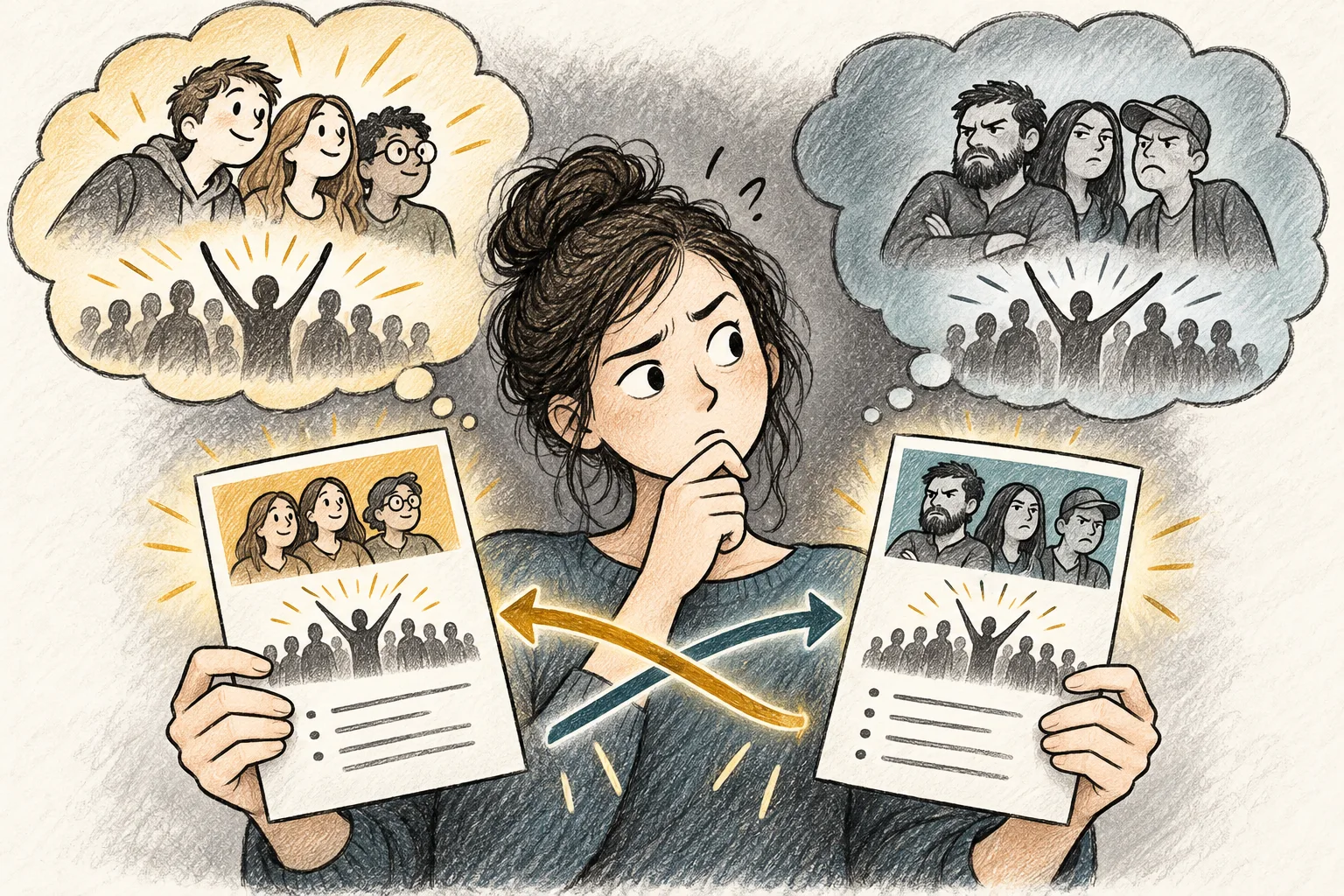
Write two short versions of the same argument. In the first, use your own religious, political, or skeptical group. In the second, give the argument to a group you distrust. Keep the evidence identical. Ask whether your standard changes.
For example: “Thousands of people report feeling transformed after joining this community, so its supernatural claims are true.” Now change the community. If the conclusion suddenly looks weaker, identify the missing evidence in both versions. The point is to make the rule travel with the argument.
Use the confidence reflection to record your current support and the evidence that would change it. Be specific enough that a future version of you cannot quietly move the goalposts.
Discuss and carry forward
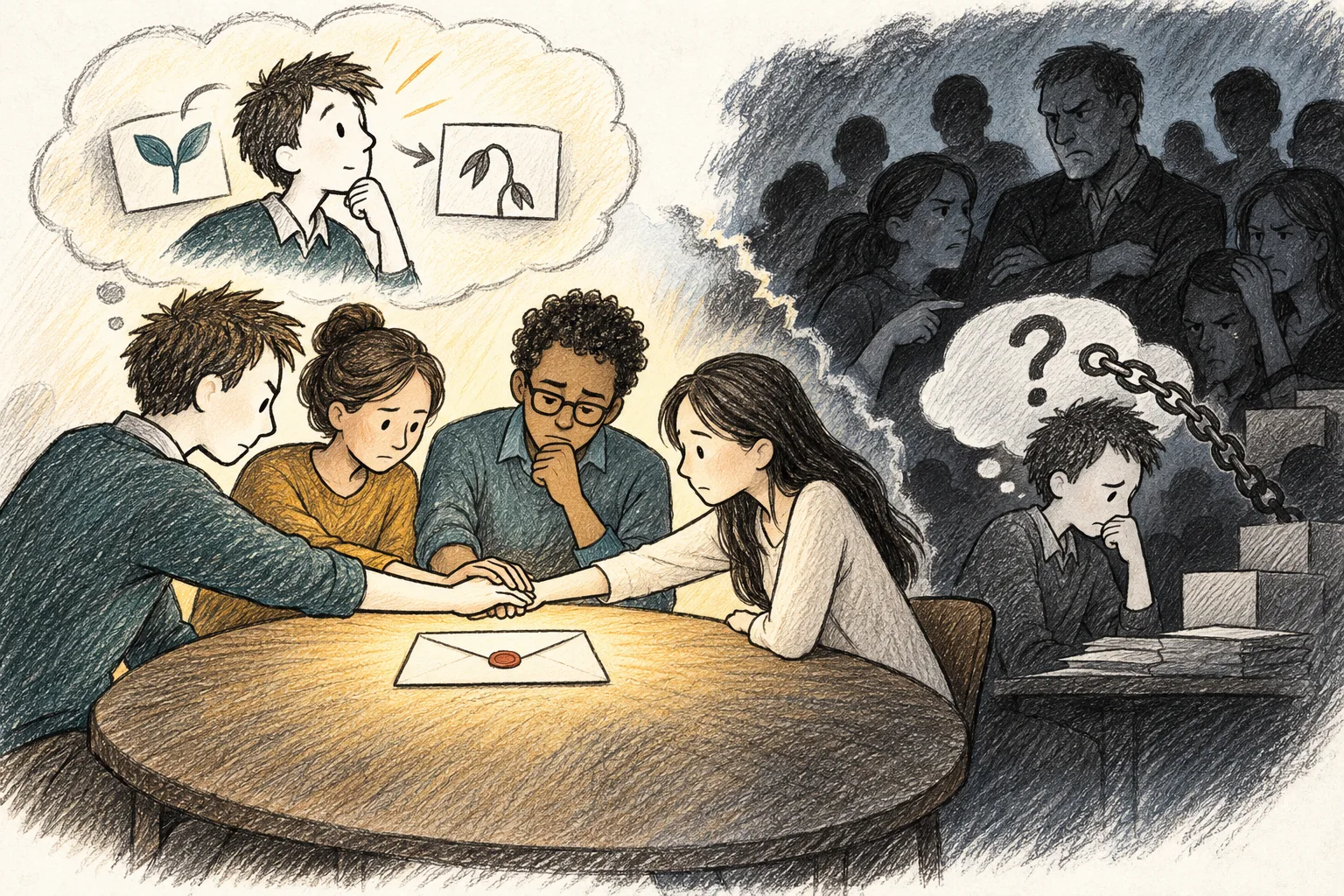
Think of a time you changed your mind without losing your dignity. What made correction possible? Now consider a group in which public doubt carries a penalty. How would that alter the evidence people admit, the questions they ask, and the disagreements outsiders ever get to see?
Carry forward the distinction between being allowed to ask a question and being able to live with the consequences of asking it. That is where the next lecture begins.