
Give the feeling an accurate name

A thought about leaving religion arrives and your chest tightens. Somebody says the fear is God warning you. Somebody else says you should be over it already. Both responses can rush past the thing you actually know: you are feeling fear, and you have not yet established what that fear tells you about the world.
Start with three separate statements. What happened? What did I feel? What explanation did I attach to it? “I read a criticism of my church. I felt anxious. I interpreted the anxiety as danger.” Keeping those statements separate gives you somewhere to investigate. Once they collapse into “criticism is dangerous,” the emotional reaction starts doing the work of evidence.
Emotions can tell us about needs, memories, expectations, relationships, and perceived threats. They deserve curiosity. A feeling does not arrive with an independently verified account of its cause. Someone who claims the authority to interpret every feeling for you is asking for a great deal of power.
Regulation gives you another move
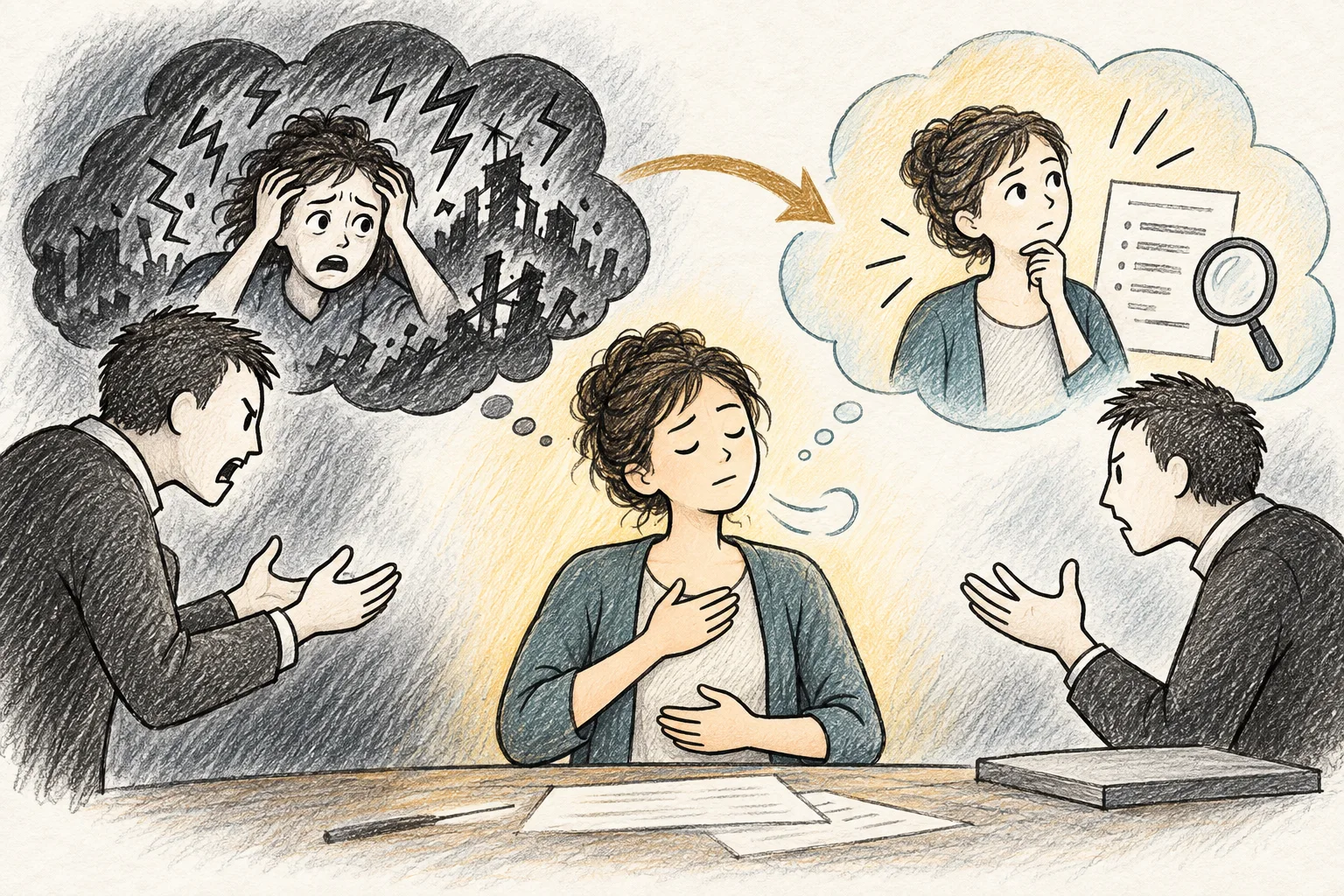
Imagine a person hearing a challenge to a belief they learned as a child. One possible interpretation is, “This person is trying to destroy my life.” Another is, “This person is questioning a claim I have relied on.” The second interpretation leaves more room to inspect the argument. You can still decide the argument is poor after examining it.
This is an example of reappraisal: changing how a situation is construed. Gross's experimental work compared reappraisal with suppressing outward emotional expression and found different effects on experience, expression, and physiology. It offers a useful distinction between changing an interpretation and merely hiding a reaction. What works in a particular situation still depends on its circumstances. Research note 1
Reappraisal should preserve accurate information. If someone threatens your housing over a belief, “perhaps I'm just being negative” is a poor reappraisal. A better one is, “The threat is real. I can choose when and where to have this conversation while I build practical options.” Emotional regulation can help you respond to reality without requiring you to excuse it.
Sometimes the useful move is to pause, walk outside, drink water, or postpone the argument. The point is to regain enough choice to decide what you want to do. There is no prize for forcing yourself to finish a conversation while you cannot think.
Attention without a supernatural explanation
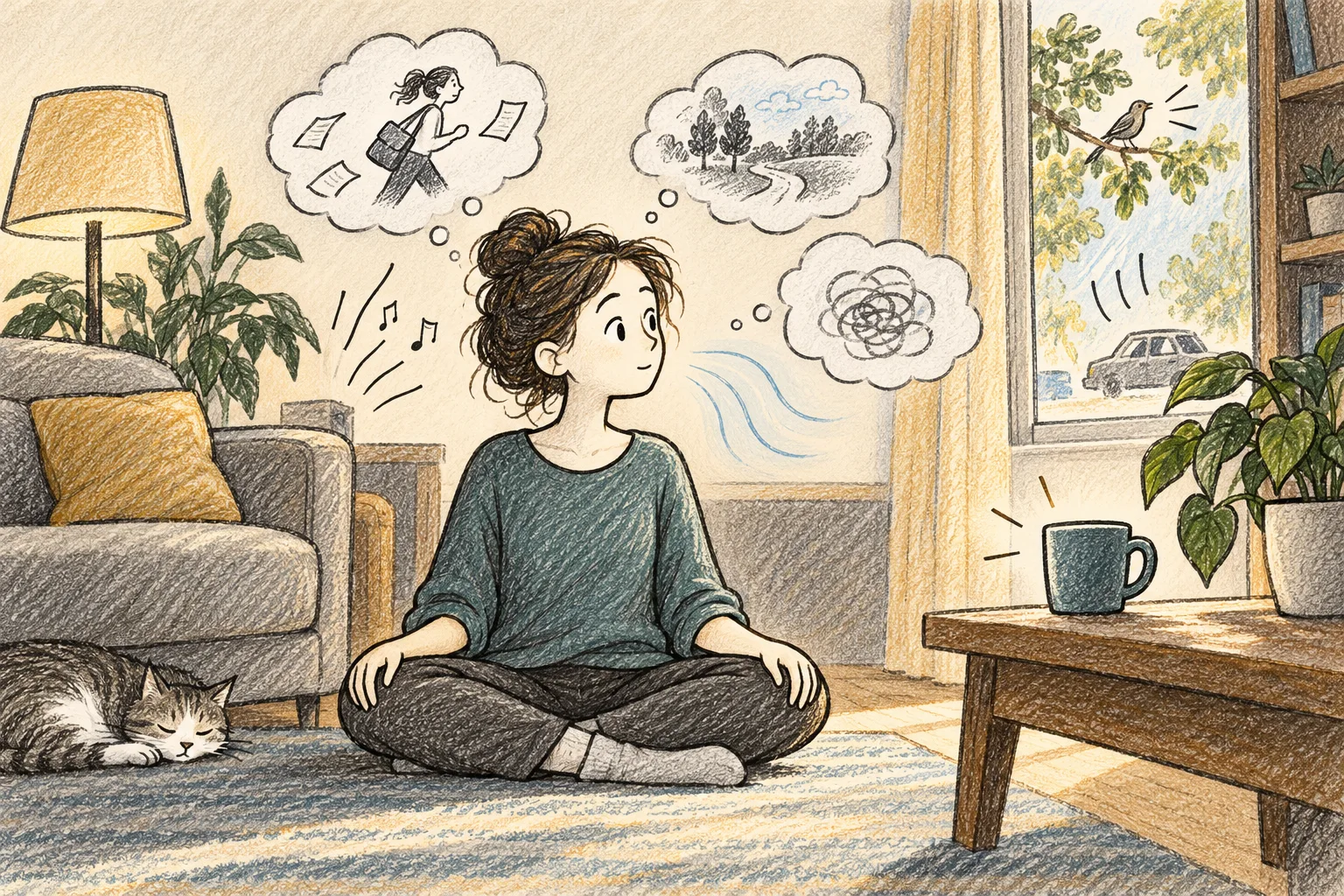
Try an optional one-minute practice. Pick a neutral object you can see. Notice its edges, color, and position. When your attention wanders, notice the wandering and return. Keep your eyes open. Let your breathing stay ordinary. You can stop whenever you want.
What did you learn? Perhaps your attention moved more often than you expected. Perhaps nothing special happened. You observed something about your present experience. There is no need to attach cosmic significance to it. The ability to notice a thought without immediately following it is already a useful thing to explore.
Meditation and mindfulness research covers many different practices and outcomes. NCCIH reports potential benefits alongside uneven evidence and possible adverse experiences. A brief exercise on this site is an invitation to observe attention. Skip it if it makes you uncomfortable; choosing an ordinary activity or a pause is fine. Research note 2
A powerful experience needs a careful explanation
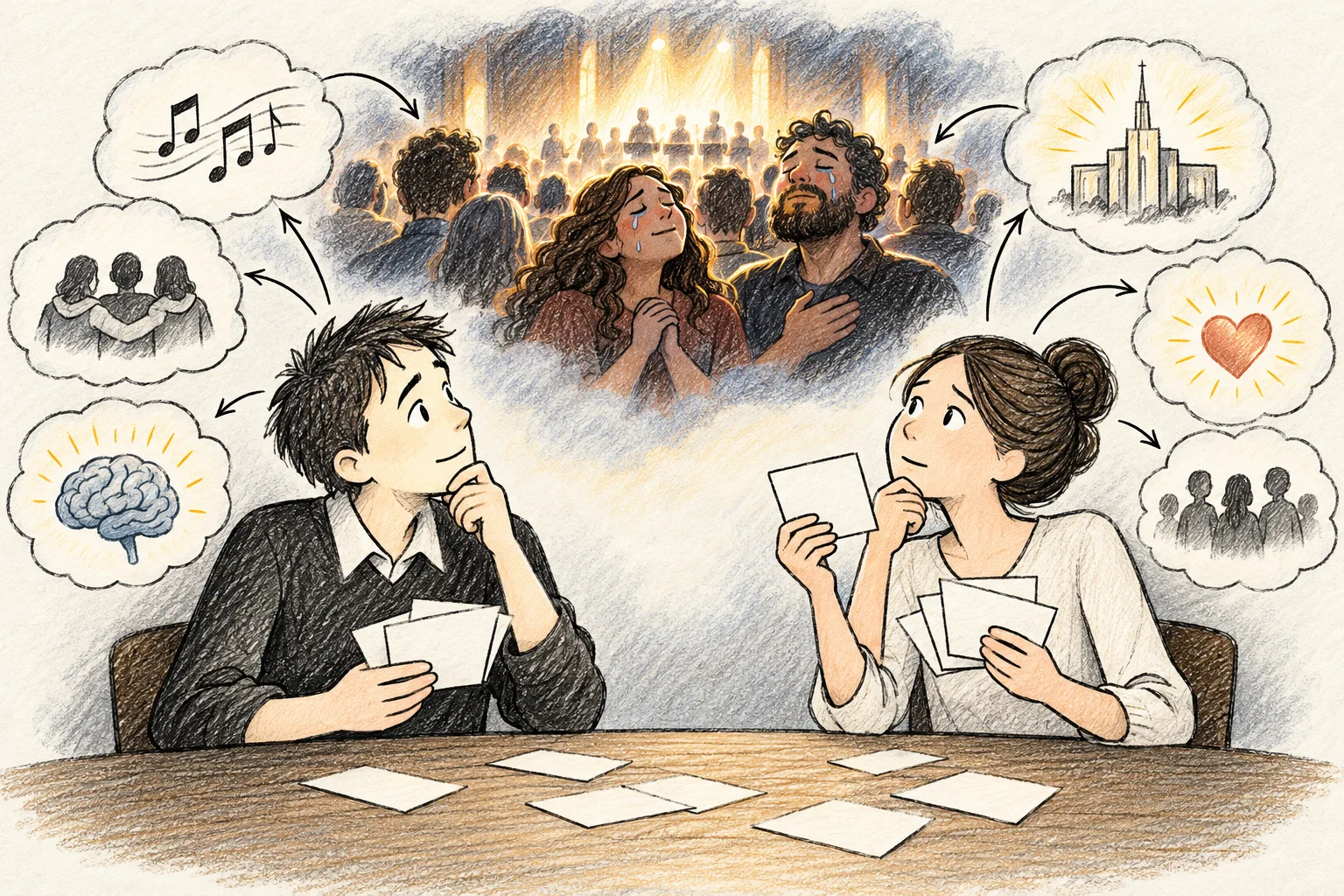
A room goes quiet. Music rises. People you trust are crying. You feel warmth and a sense of connection. The experience may matter deeply. Now someone says it proves their doctrine. Notice the additional claim being attached to the experience.
The religious-experience research discussed in lecture 1 found an association between reported spiritual feelings and reward-related brain activity in one small Mormon sample. It gives us something concrete to discuss about human experience. It leaves the interpretation of a particular doctrine to further argument. Research note 10
A good question is, “How would we distinguish this explanation from another one?” Would a similar experience in a different tradition count for that tradition? What about an experience during music without any religious content? Apply the same rule each time. Otherwise the feeling becomes evidence only when it lands in the preferred story.
Exercise: separate the layers
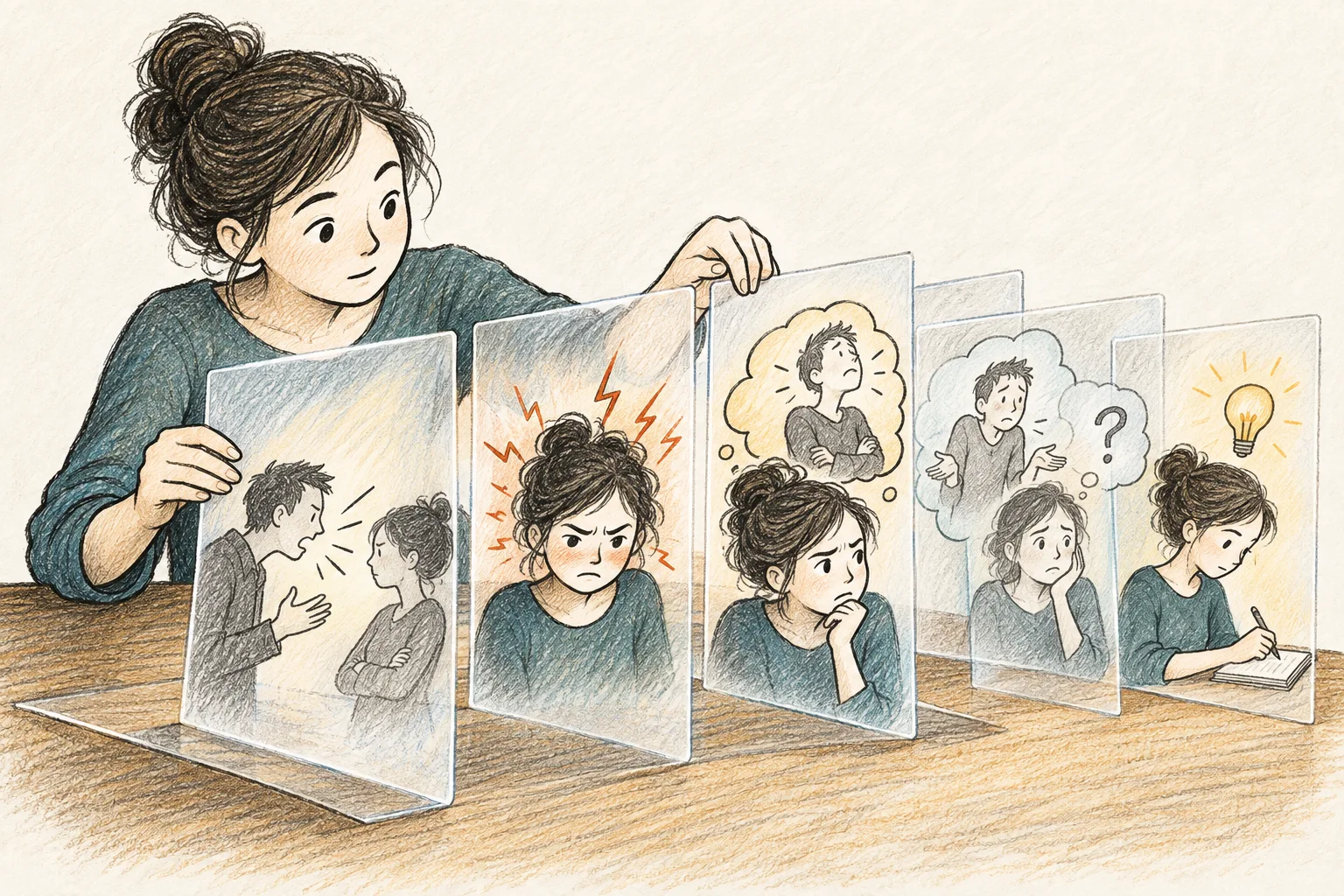
Write one event in a single sentence. Under it, name the feeling as precisely as you can: fear, grief, relief, anger, shame, excitement, uncertainty. Then write the interpretation you first gave it. Finally, list two other plausible explanations and one practical action that helps you examine the situation.
Example: “A friend challenged my belief. I felt anger. I thought they were disrespecting me.” Alternatives might be that the friend chose their words badly, or that disagreement felt personal because the belief is tied to your family. A useful action could be asking which specific claim they are challenging. That question produces information.
You can use the one-minute timer and then record what changed, if anything. Do not treat feeling calmer as proof that a belief is true, or remaining upset as proof that you failed. The useful outcome is a clearer account of the experience and more choice about the next step.
Discuss and carry forward
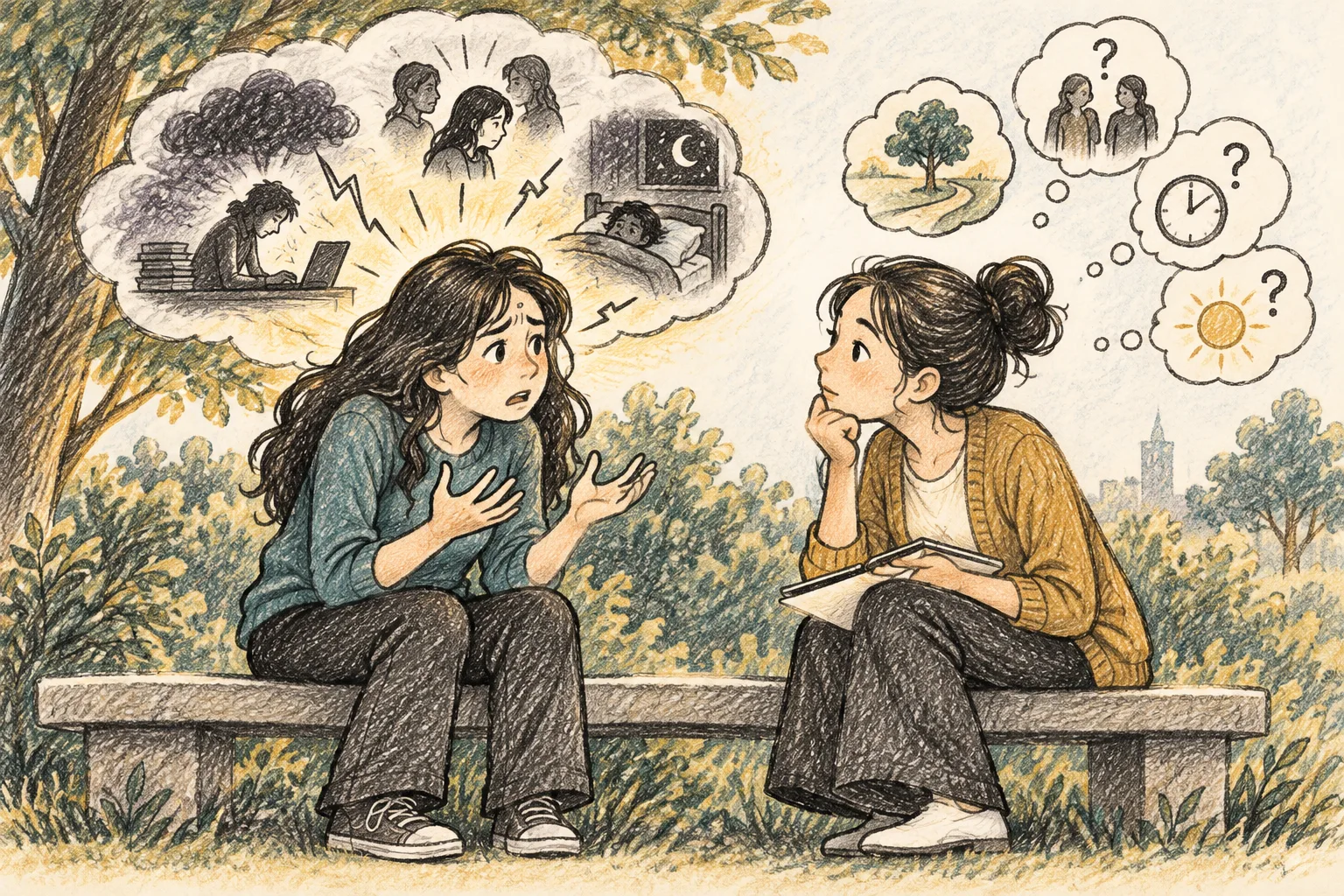
Think of a time a feeling helped you notice a real problem. Think of another time your first explanation of a feeling turned out to be incomplete. What helped you tell the difference? The next lecture builds a method for checking the explanations we attach to experience.