Look at the cost of disagreement

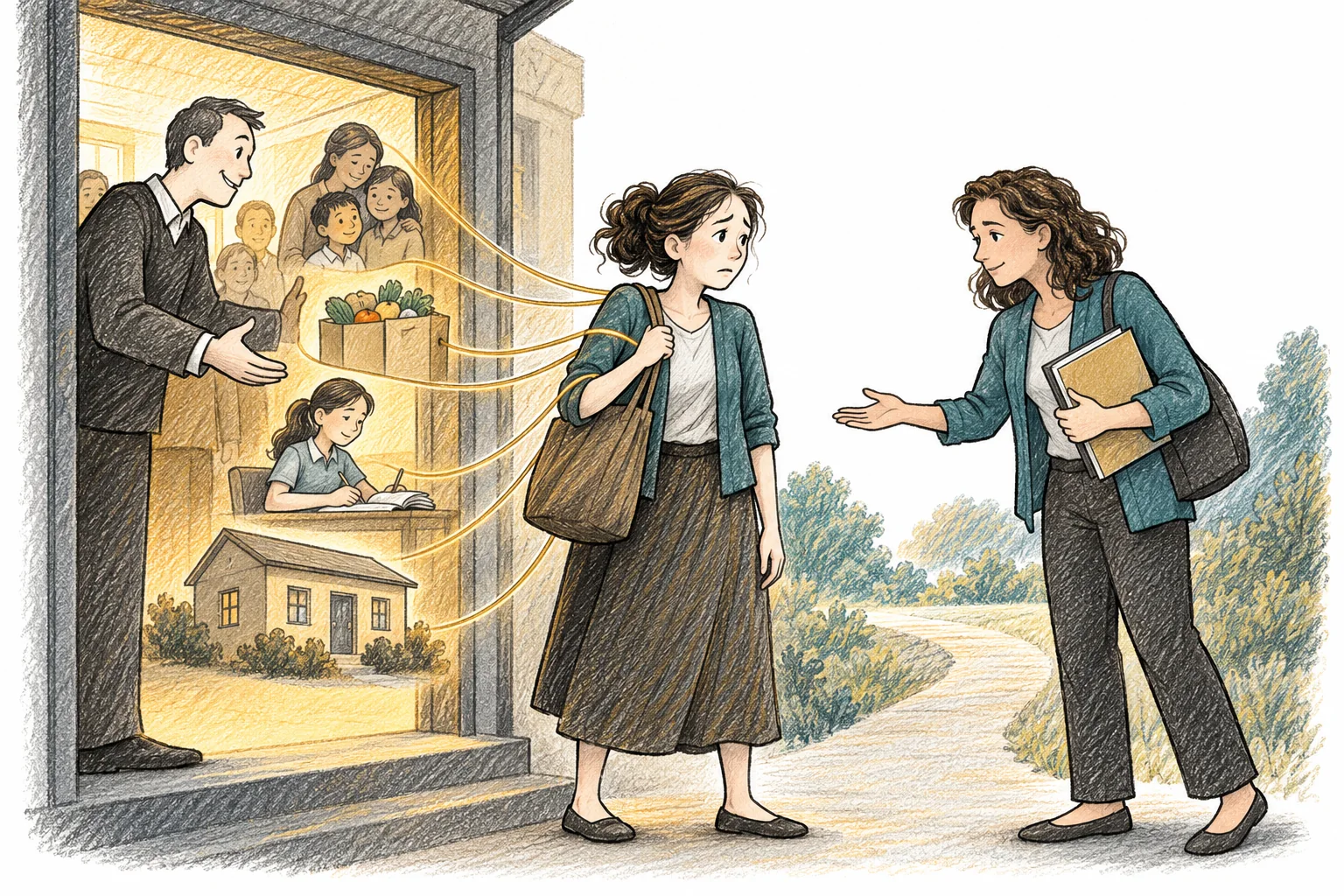
Who can actually afford to say no? That question belongs near the beginning of an outreach plan. A person may be legally free to disagree and still depend on the institution making the claim for food, education, housing, employment, or contact with family. Those dependencies change the meaning of an invitation.
Imagine two hypothetical settings. In one, adults attend a public talk, have access to other information, and can leave without losing anything essential. In another, a single organization controls education and assistance while discouraging criticism. The second setting raises more urgent questions about meaningful choice. The difference lies in the conditions around the person.
Use those conditions to prioritize attention: control of information, penalties for doubt, dependency, age, isolation, and locally expressed need. Examine the actual setting. A map label or a national income statistic cannot tell you whether a particular person has independent support or whether an organization conditions help on agreement.
Gather public evidence carefully
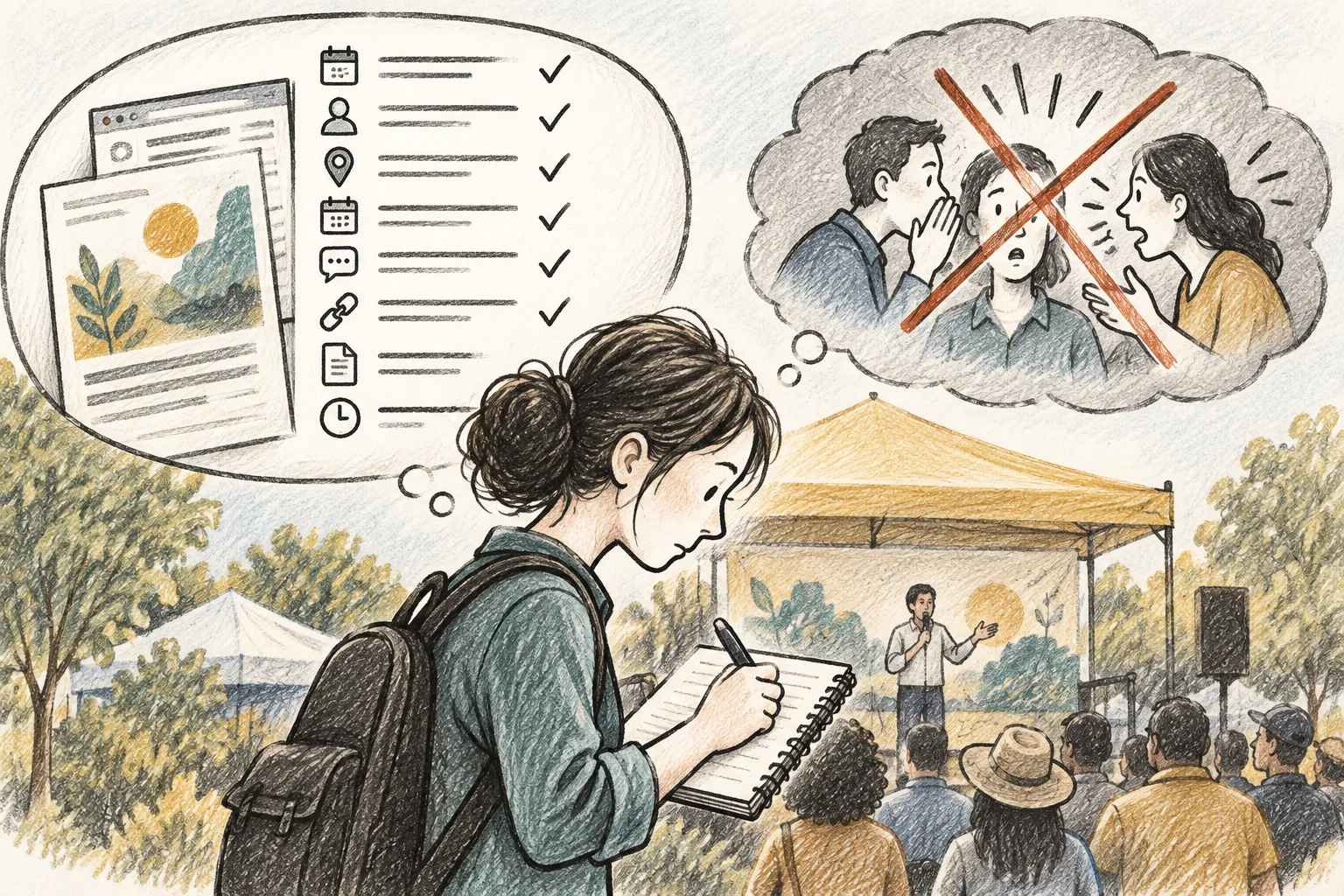
Start with the organization's own public material. Record the event title, organizer, location at the appropriate public level, advertised dates, exact claim, source address, publication date, and date checked. Preserve enough context that a reader can see whether your summary is fair.
Check what independent sources can establish. An organization's promotional statement tells you what it advertises; it does not independently confirm that an activity occurred or that its outcomes matched the advertisement. A public event page may also be outdated. Record uncertainty instead of silently converting a plan into a completed event.
The source-checking method from lecture 5 applies here. Trace the claim, investigate the source beyond its own presentation, and distinguish repeated reporting from independent confirmation. Research note 5
For a future event directory, keep the unit of record clear: public organizations, public campaigns, and public claims. Each record needs provenance and a way to distinguish announced, confirmed, completed, canceled, and unverified status. Empty fields are better than invented facts. The present site teaches this workflow; it does not claim to contain a verified national inventory.
The participant is not your evidence trophy
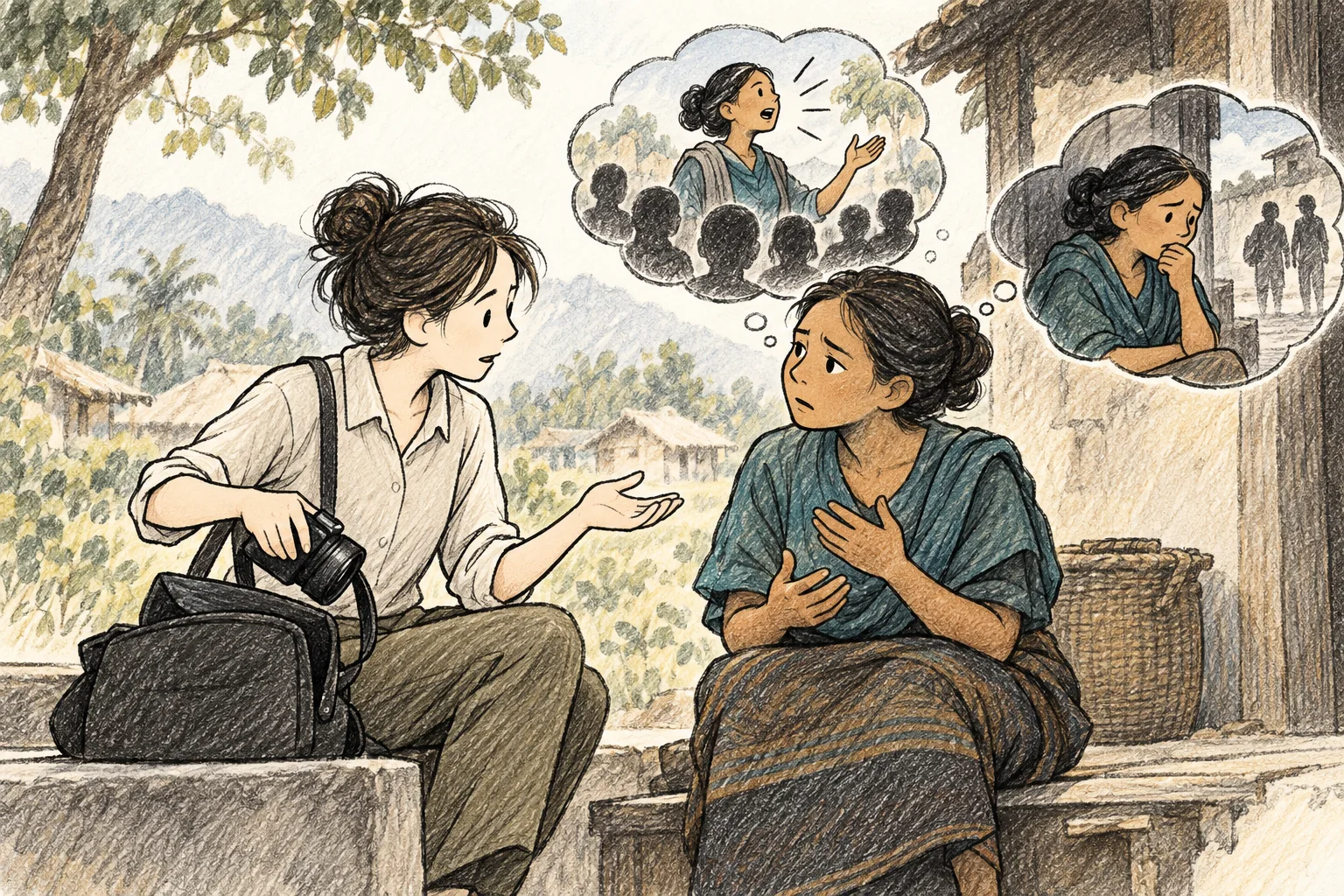
An organizer's public claim and a participant's private doubt are different kinds of information. Someone who speaks with you may face consequences after you leave. Ask what can be shared, with whom, and for what purpose. Consent to a conversation does not automatically include a photograph, a name, or publication.
A local host can explain the setting, but each person still needs control over their own participation. Offer ways to listen without speaking, use hypothetical examples, and read material privately. Avoid collecting details that the educational work does not require. If you cannot protect a sensitive account, do not solicit it for publicity.
Historical evidence about forced assimilation gives this principle weight. The boarding school investigation documents what institutions can do when they claim authority over the identities and futures of people with less power. Our field practice should be built around keeping participants' choices visible. Research note 13
This project begins with adult education. Work involving children needs a separate age-appropriate design, qualified local supervision, and clear responsibility for their welfare. A strong conviction about indoctrination does not make every intervention useful to a child.
Plan with the people who stay
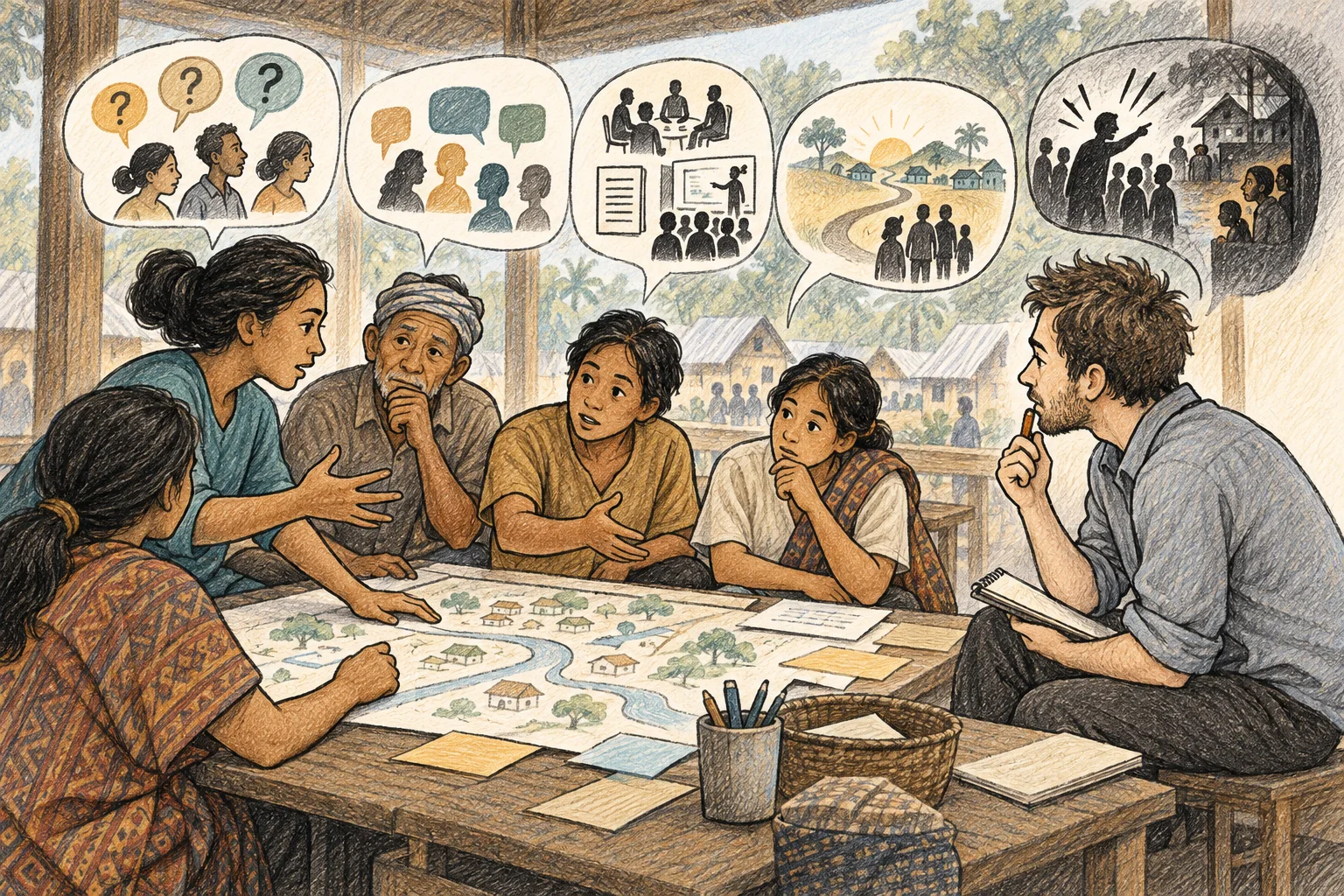
Before a visit, ask local partners what questions people are already asking, which language makes the material accessible, and what format they actually want. Discuss what might happen after the visitor leaves. A public confrontation may attract attention while making private inquiry harder for the people nearby.
Choose a form that fits the purpose: an invited workshop, a small discussion, a printed lecture, a public response article, or an agreed exchange with an organizer. Ordinary event rules and participant choice matter. The educational goal does not require interrupting services, pursuing private people, or pressuring someone to debate.
For translation, ask a fluent local reviewer to check examples, tone, and meaning. A literal translation can preserve the words while losing the argument. Terms such as evidence, doubt, obedience, and consent may need explanation through locally recognizable situations. Keep the original source references available so reviewers can check the factual claims too.
Write a response that can survive scrutiny
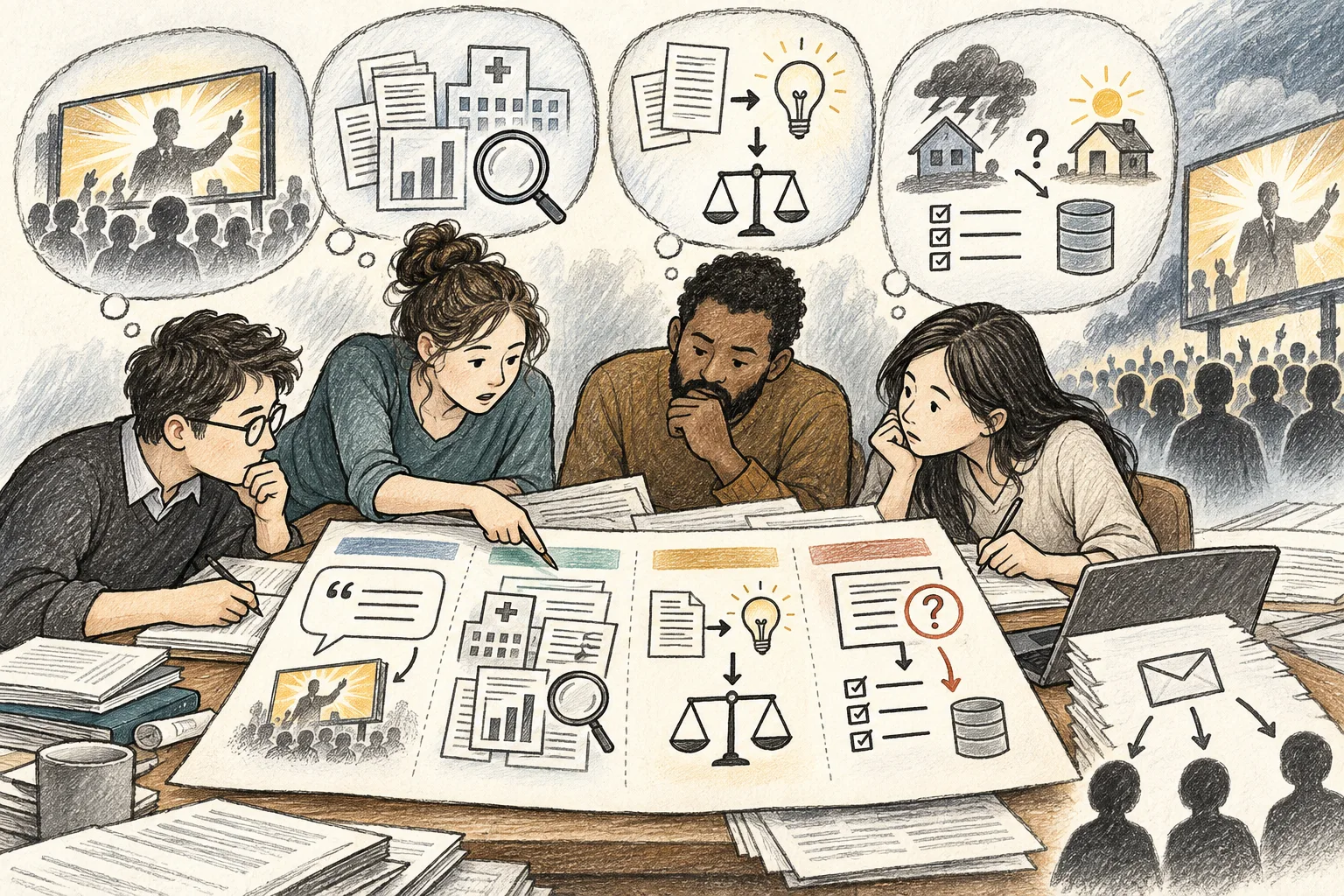
A useful public response has four parts. State the claim and its source. Explain what evidence is available. Show the reasoning that connects the evidence to your conclusion. Name the specific correction or additional information that would change your assessment.
Suppose a campaign advertises “guaranteed protection through prayer.” Quote only the relevant words with a source and context. Ask what outcomes count as protection, how failures are counted, and what independent records support the guarantee. Distinguish the advertised promise from an accusation about the organizer's private intentions.
If the organizer corrects the advertisement or supplies evidence, update your response. Keep the change visible. The point of a public challenge is to improve what people can know, including when the improvement requires revising your own statement.
Exercise and discussion
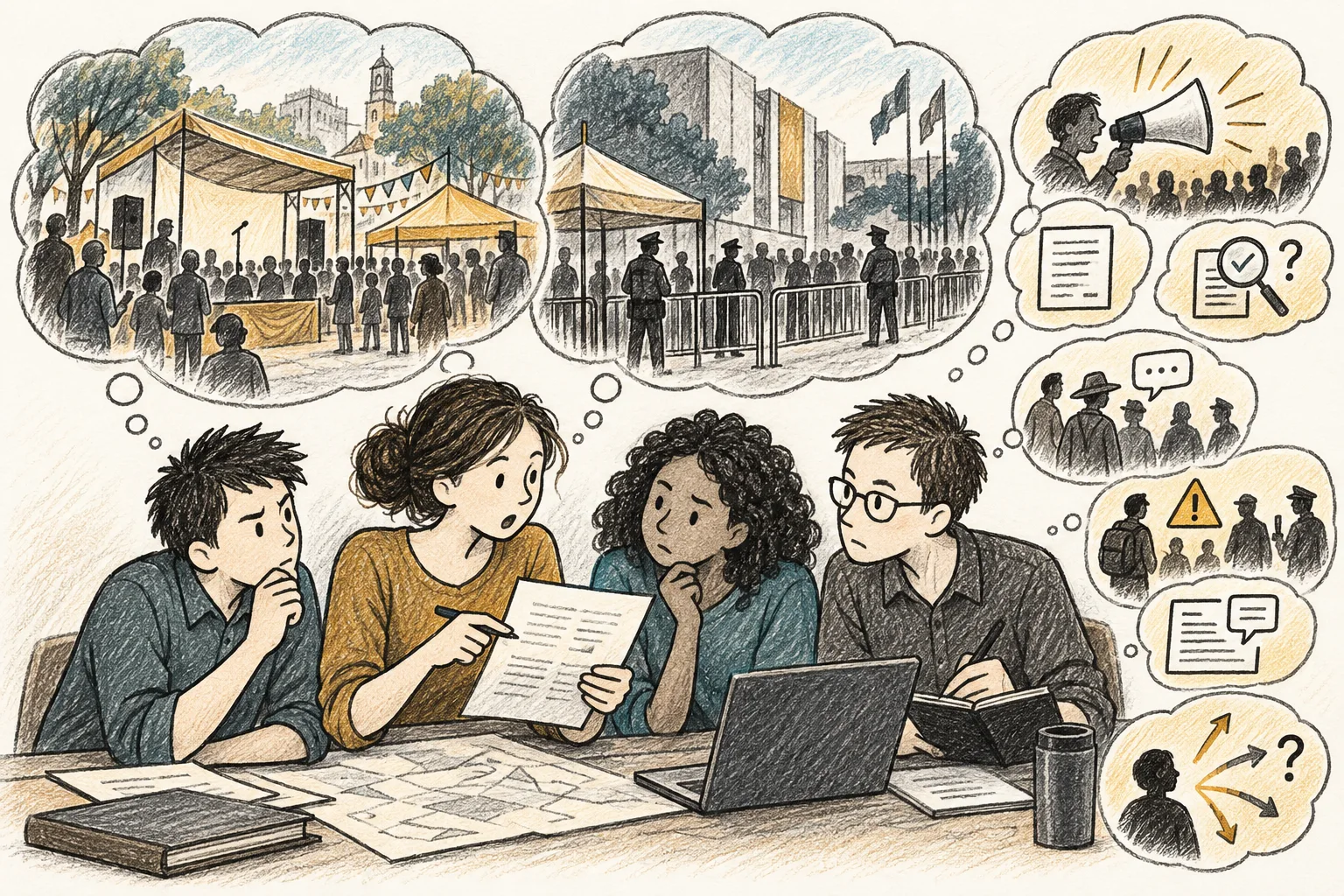
Create a field brief for a hypothetical public event. Include the public claim, source, verification status, local request, participation risks, proposed response format, and a useful take-away. Leave unknown details marked unknown. Do not invent a partner, attendance figure, or successful outcome to make the plan look complete.
Discuss which information belongs in a public report and which should remain uncollected or private. Then ask whether the planned activity expands a participant's choices after the visitor leaves. The final lecture turns that standard into a workshop and an evaluation method.