
What the comparison exposes

Religion can function like heroin. It can offer relief so powerful that protecting the source of relief becomes more urgent than asking whether the story attached to it is true. That is the comparison at the center of this project: a system can make you feel safe, right, forgiven, and headed somewhere meaningful while teaching you to defend the very thing that keeps you dependent.
Consider the offer. Death becomes a reunion. Uncertainty becomes a plan. Shame becomes a debt that an institution knows how to settle. Loneliness becomes a family with a ready-made explanation for your existence. Those are enormous human needs. A worldview that promises to meet all of them has emotional power before anyone gets around to checking its evidence.
The question is what happens when relief comes with a condition. Keep believing. Keep returning. Interpret doubt as danger. Let the institution define both the wound and the remedy. A person can become invested in maintaining the explanation because challenging it now threatens everything the explanation holds together.
This is a functional metaphor about emotional dependence and protected certainty. Follow the relationship it describes: distress, promised relief, repeated reassurance, and a growing cost of questioning. Ask where that pattern actually appears. You can examine it in a congregation, a family, a political movement, or your own habits without pretending you can read somebody else's mind.
When the cure owns the problem
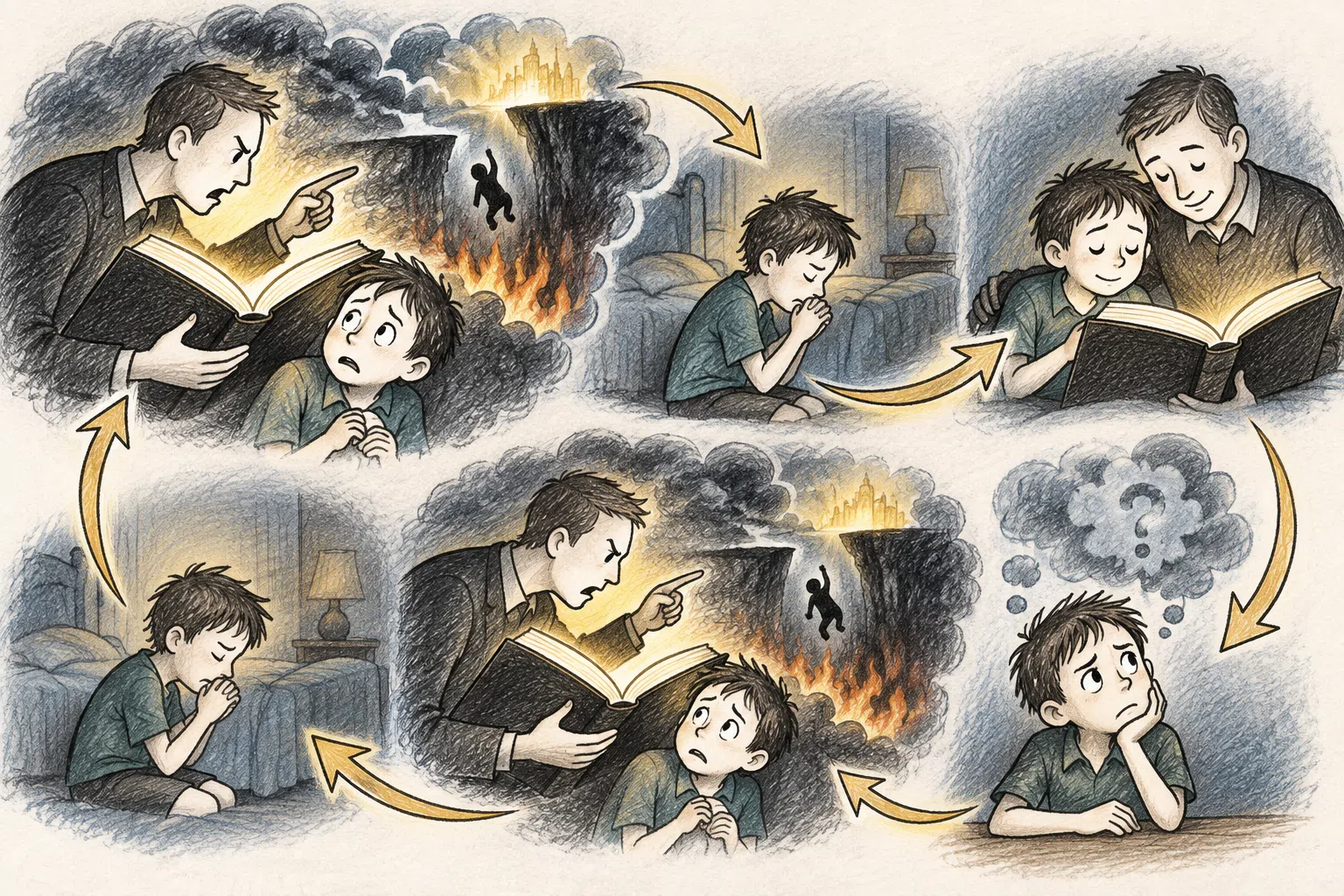
Imagine a child being taught that ordinary doubt places their eternal future at risk. The child becomes frightened, prays, receives reassurance, and feels better. Later another doubt arrives. The same route offers relief again. If the child eventually questions the teaching itself, the fear may be presented as evidence that leaving is dangerous.
Look at the circularity. The teaching supplies the threat. Returning to the teaching supplies relief. Relief is then used to confirm the teaching. Where in that sequence did anyone independently establish the original threat?
That is why “it brings people peace” does not end this conversation. We need to ask what produced the distress, what the relief requires, and whether the person can investigate another explanation without punishment. If a system frightens you away from questioning it and then congratulates itself for calming you down, that deserves scrutiny.
A reassuring belief can also become a stopping point. “Everything happens for a reason” may close a question about avoidable harm. “God will provide” may displace a practical plan. “I have been forgiven” may be used to avoid repairing damage. In each case, examine the actual behavior. Does the reassurance help someone face reality, or provide an excuse to stop looking?
What the brain research contributes

Ferguson and colleagues studied spiritual experience with fMRI in 19 devout Mormons. Reported spiritual feelings were associated with activity in reward-related regions, including the nucleus accumbens, alongside other networks. This gives us a concrete research foothold: experiences treated as spiritual confirmation involve identifiable human systems of reward and attention. The study measured responses in a small, selected group during religious tasks. Its findings belong at that level. Research note 10
The larger dependence argument here is our interpretation of how emotional rewards, authority, fear, and social costs can work together. To investigate it in a particular setting, look for observable conditions. Can members seek contrary information? Are questions answered or punished? Is relief repeatedly tied to obedience? What happens to relationships when someone stops agreeing?
A moving experience still leaves a separate question about its cause. If music, familiar language, a shared room, and hope can contribute to an experience, a person needs a reason to select a supernatural explanation over those alternatives. Intensity does not perform that comparison for them.
Take the need seriously
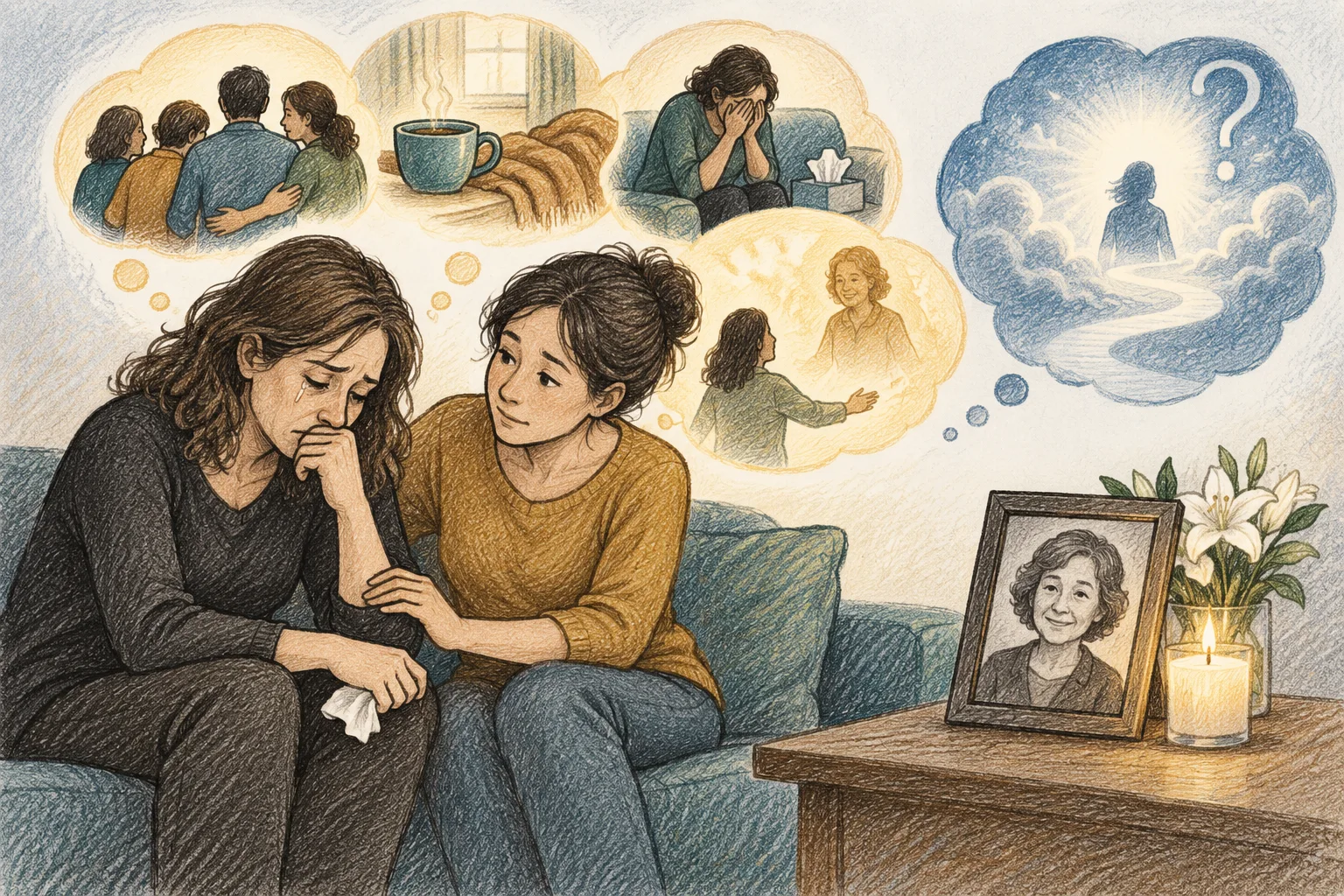
Suppose someone tells you, “My faith is the only thing that got me through my mother's death.” The useful response starts with the loss. Their need for comfort does not vanish because an argument is weak. Nor does the loss give an institution unlimited authority over what they must believe afterward.
Ask what helped. Was it having people nearby? A daily routine? Being allowed to cry? A story about seeing her again? Separate those ingredients. Some may be available through friendship, remembrance, counseling, art, or ordinary acts of care. Others remain claims about reality that deserve their own examination.
That separation matters to outreach. If you challenge a person's entire support structure while offering only an argument, you have left the most powerful part of the problem untouched. A humanist response should help make companionship, meaning, and inquiry available together. People should have room to discover whether they still endorse a belief when their ability to belong no longer depends on it.
Exercise: follow the relief
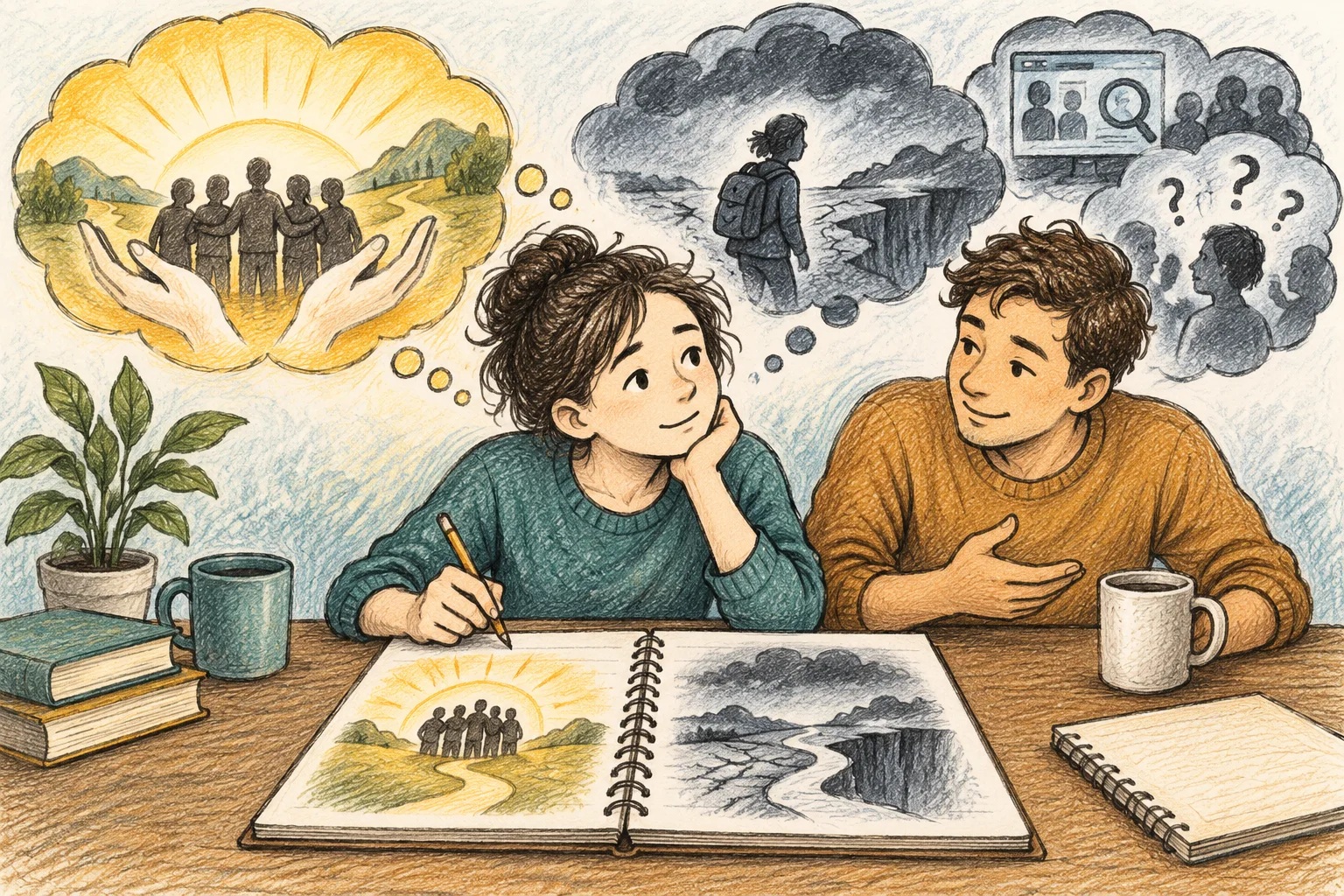
Choose one reassuring belief you have actually used. Write down the problem it promises to solve, what you feel when you accept it, and what you fear would happen if you stopped. Then list the practical supports you would need to examine it honestly.
Use a hypothetical example if the personal one is too loaded: “Our group is the only safe place in a corrupt world.” Ask what evidence would support that claim, what information the group discourages, and who benefits when members believe every alternative is dangerous. A useful answer names conditions you can investigate instead of calling the members weak.
Discuss and carry forward

When does comfort make it easier to face a problem, and when does it make a person protect the explanation that keeps the problem in place? Give one example of each. The distinction should rest on what the belief enables, what it demands, and whether it remains open to correction.
Carry this question into the next lecture: if your peace depends on a belief surviving, what kind of hearing will you give evidence that threatens it?