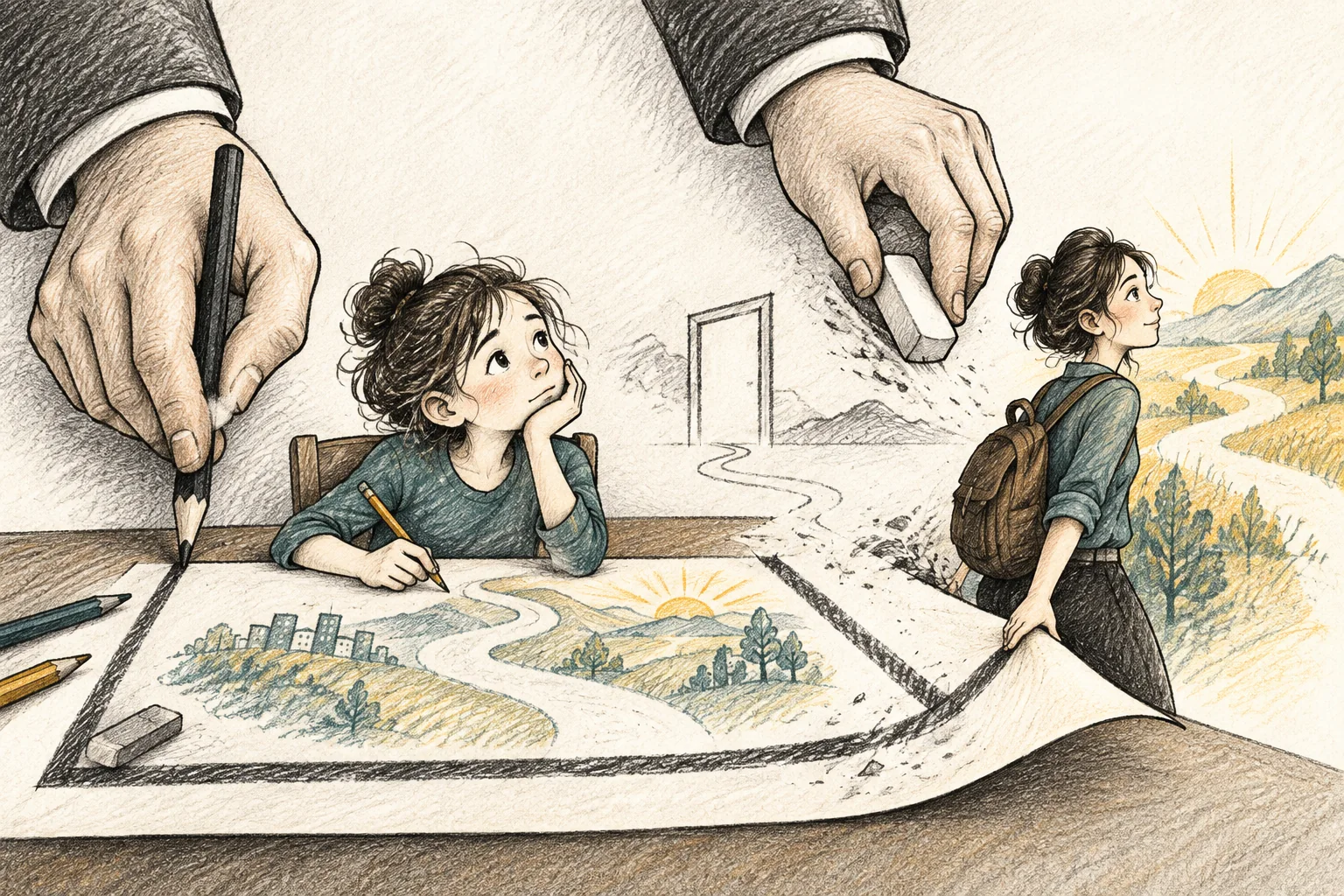
Before you could choose
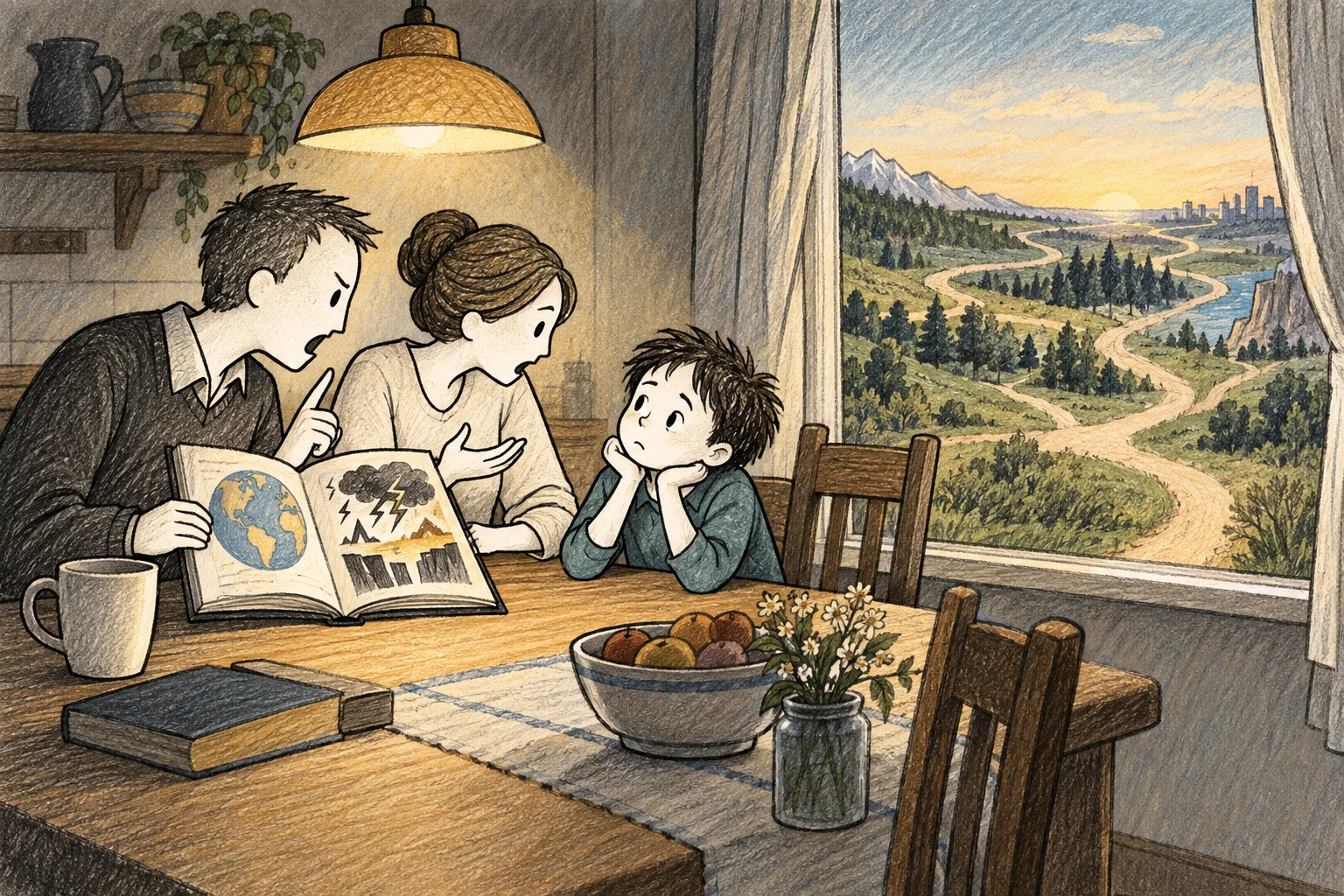
Unquestioned belief can steal authorship of a life.
A child begins inside somebody else's explanation of the world. Adults supply language, categories, routines, consequences, and accounts of what is dangerous. A child has to learn from other people. The serious question is what happens when those people claim the right to close inquiry permanently.
Imagine learning that disagreement with your parents is also disagreement with the creator of the universe. A household rule now carries cosmic authority. Imagine being taught that curiosity about another worldview is temptation, that a doubting friend is a threat, and that the fear you feel proves how dangerous the question was. The system has reached beyond the answers you give. It has started shaping the questions you permit yourself to form.
That is the center of this project's critique of indoctrination. A person may spend years making apparently voluntary choices within a range of possibilities they were trained never to look beyond. The loss includes lives they never considered, relationships they avoided, and parts of themselves they learned to treat as wrongdoing.
How an explanation becomes the default
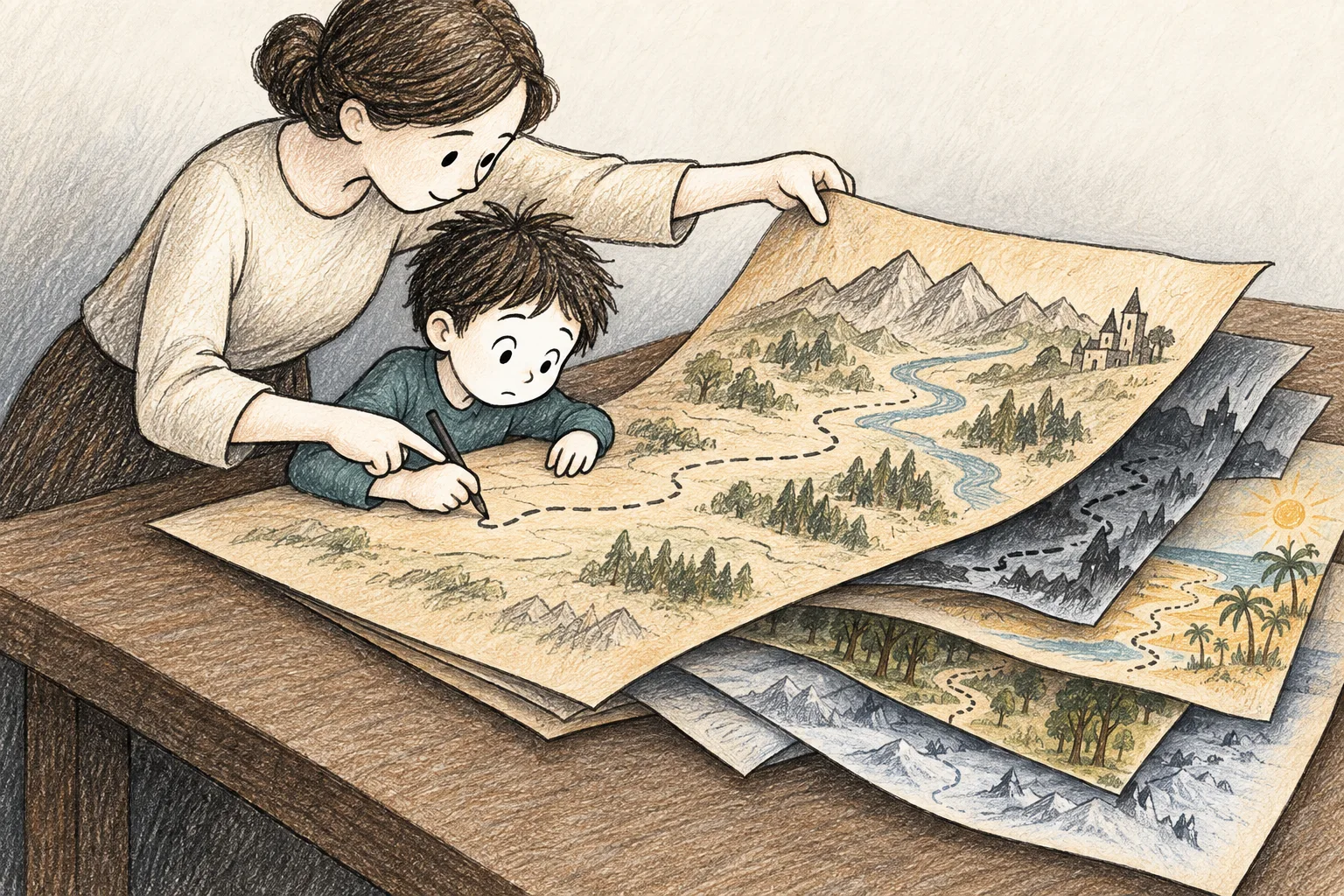
Teaching offers reasons that a learner can eventually inspect. Indoctrination, as we use the term here, protects a conclusion by restricting alternatives, attaching penalties to doubt, or making an authority exempt from correction. Ask how the belief is maintained and what happens when someone challenges it.
In experiments by Corriveau, Chen, and Harris, children from different religious backgrounds differed in how they judged characters in religious and fantastical stories. The studies involved young children and specific story tasks; religious exposure was not randomly assigned. They give us evidence that background and testimony matter to children's judgments, with several possible influences entangled. Research note 11
The broader ethical argument is ours: children deserve an education that increases their future ability to examine the world. A lesson should give them tools that eventually let them question the lesson itself. If its survival requires blocking that development, we should ask whose interests it serves.
You can examine this without assigning a label to every religious family. Look at the actual arrangements. Are outside books available? Can a child ask how an adult knows? Is a scientific explanation presented fairly? Is disagreement treated as a learning opportunity or a character defect? Can another responsible adult see what is happening?
Obedience can become an internal voice
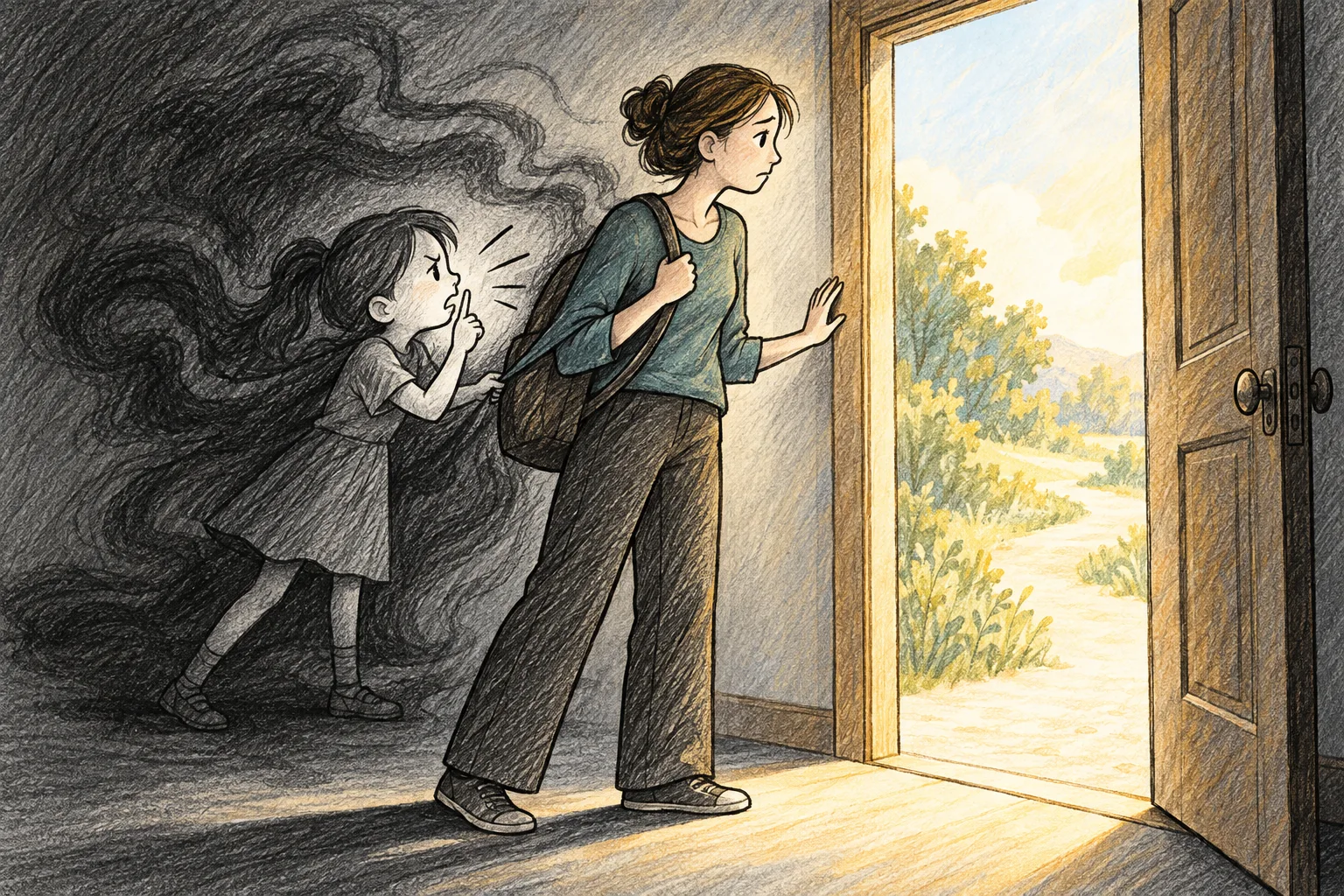
External rules do not always need an adult standing nearby. Once a child learns to interpret doubt as disloyalty, they may begin policing their own thoughts. A question appears, fear follows, and the child tries to suppress it before anyone else hears it. Later, that trained reaction may feel like conscience.
This is why “you can leave whenever you want” can be a shallow answer. What would leaving cost? A home? Tuition? Contact with siblings? The only community the person has known? A person who expects supernatural punishment may also experience danger even when the nearest authority says the choice is technically theirs.
We call the practical ability to investigate and leave “exit capacity.” It includes information, relationships, material options, privacy, and time. This is a framework for asking concrete questions. The relevant facts come from the person's circumstances. Freedom becomes more meaningful as those options become real.
A historical warning about owning childhood
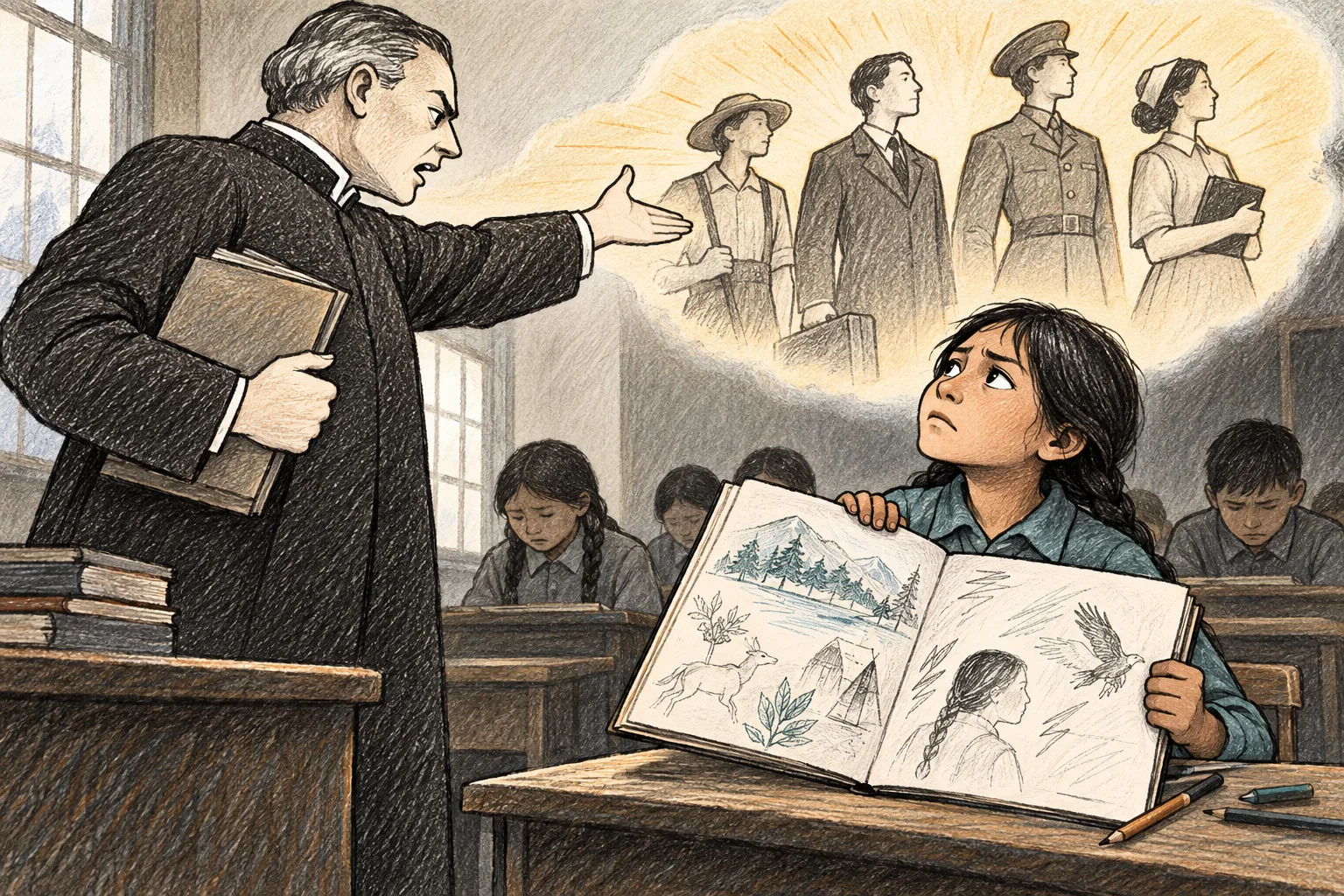
The U.S. Department of the Interior's 2024 investigation documented forced assimilation in the federal Indian boarding school system, including participation by religious institutions. Its record shows how education, government power, and religious organizations could be combined to separate children from family, language, and identity. Research note 13
That history matters to an outreach project. Arriving with certainty about what somebody else's children should become is precisely where we need to examine our own authority. A secular label does not make us entitled to a community's children. Our educational aim is to expand a learner's future choices, including their ability to refuse our conclusions.
Exercise: draw the boundaries of choice
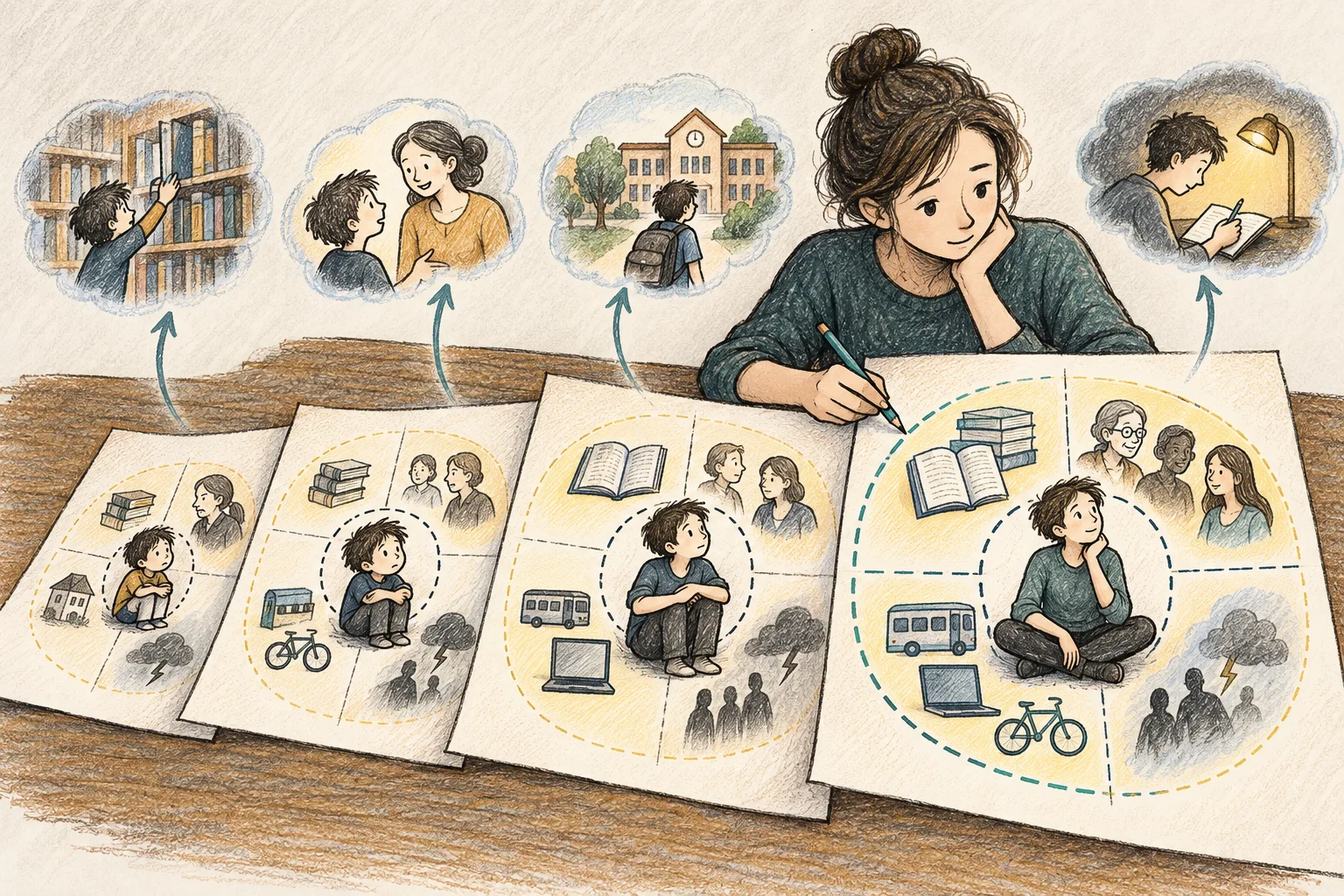
Take a hypothetical learner whose family controls their schooling, housing, transport, and religious community. Make four lists: information they can reach; people they can safely disagree with; practical resources they control; and consequences they expect if their beliefs change.
Now propose one improvement in each area. An independent library source, a trustworthy adult, access to ordinary education, or a private opportunity to ask questions may change the person's options more than a dramatic debate would. Explain why each improvement matters without requiring the learner to announce a new identity.
For your own history, ask: which questions were available to me, which felt forbidden, and which did I only discover later? You do not need to decide everything at once. Naming a boundary you inherited is already a way of examining who put it there.
Discuss and carry forward
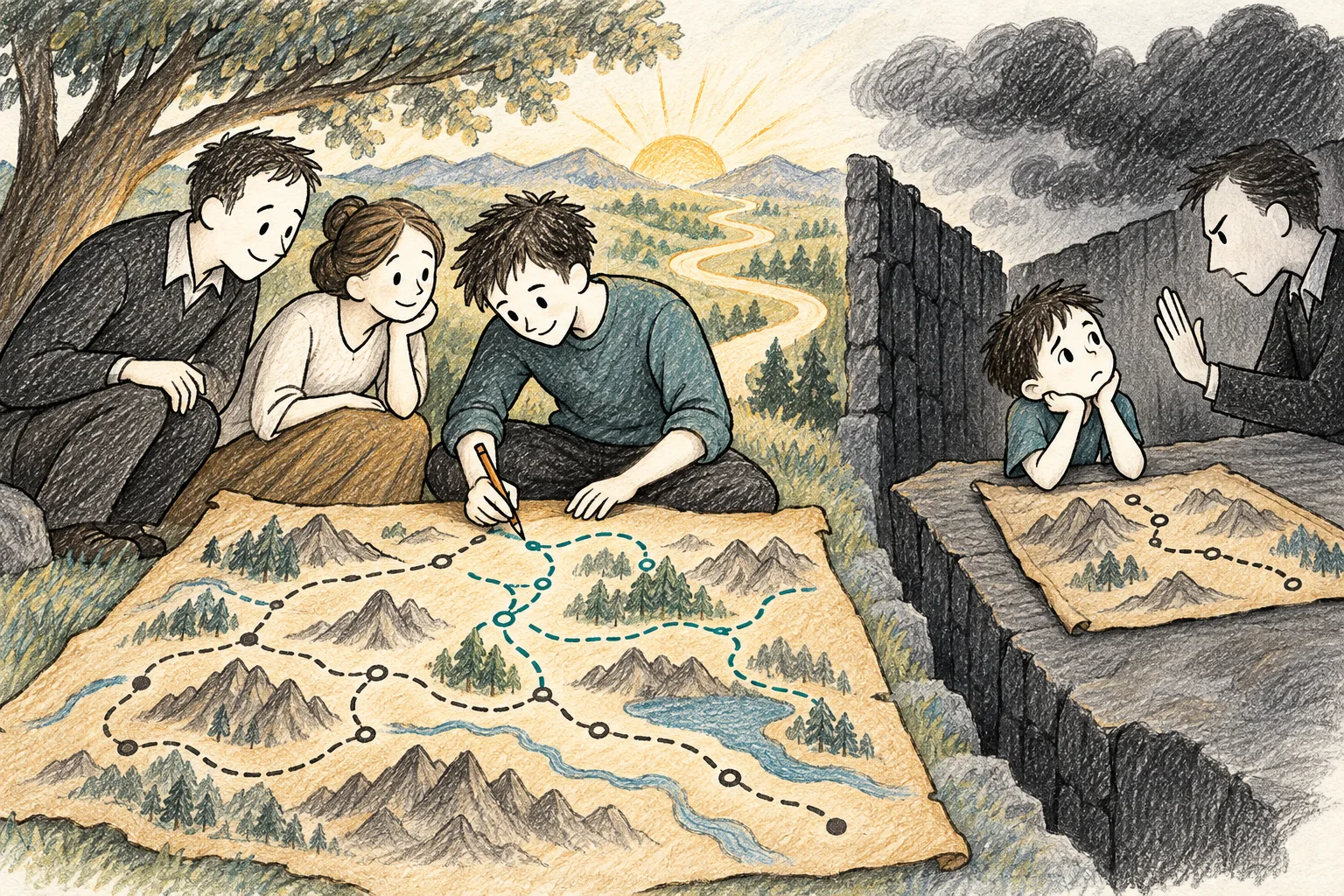
What would an education look like if adults expected their children to surpass them, correct them, and sometimes reject their beliefs? Name the concrete practices that would make that expectation credible. Compare them with a setting where the child may ask questions only until the questions threaten the prescribed answer.
The next lecture deals with the emotions that can arrive at that boundary. A strong feeling deserves attention. It also deserves room to be understood before somebody else tells you what it must mean.