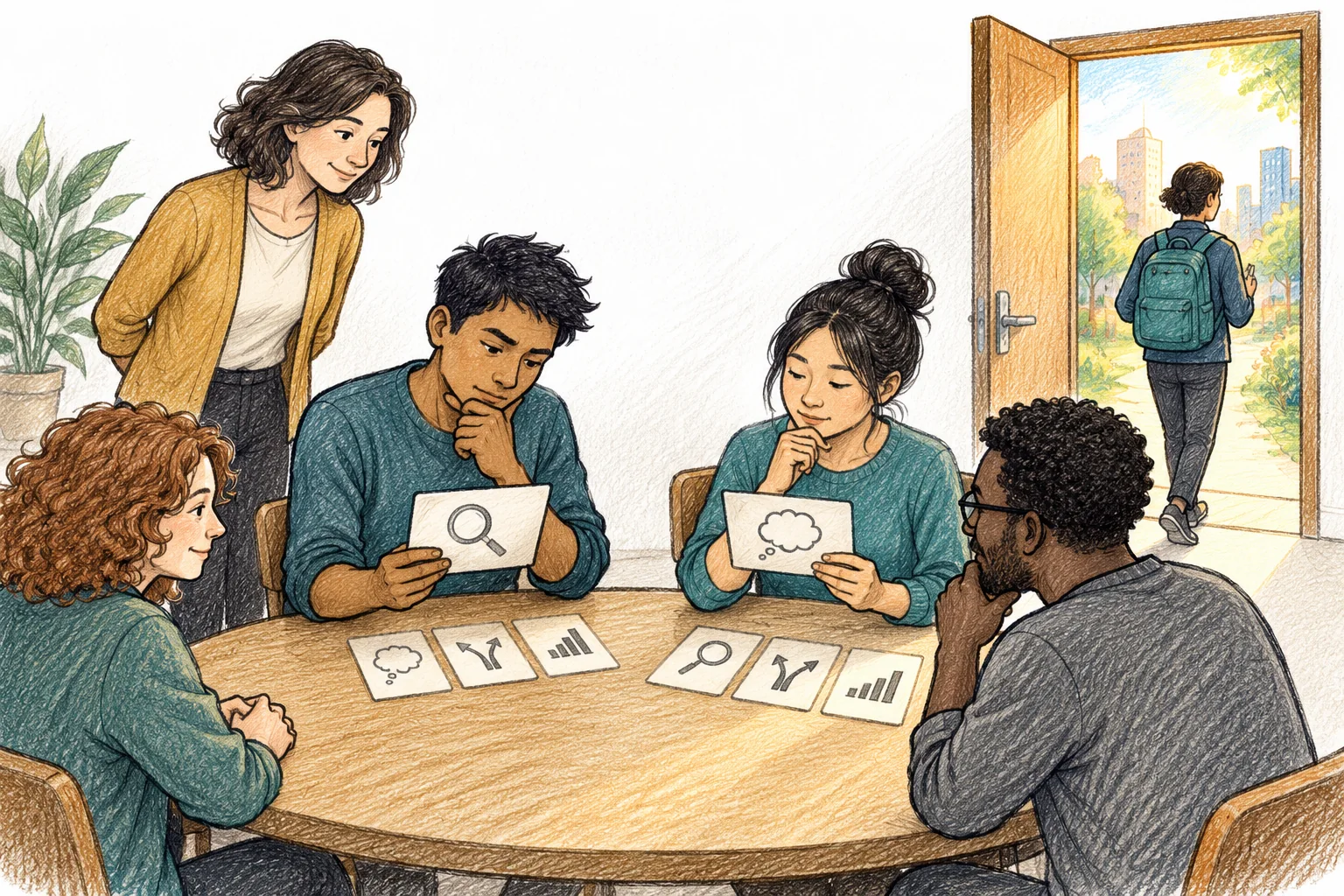
Teach a skill someone can demonstrate
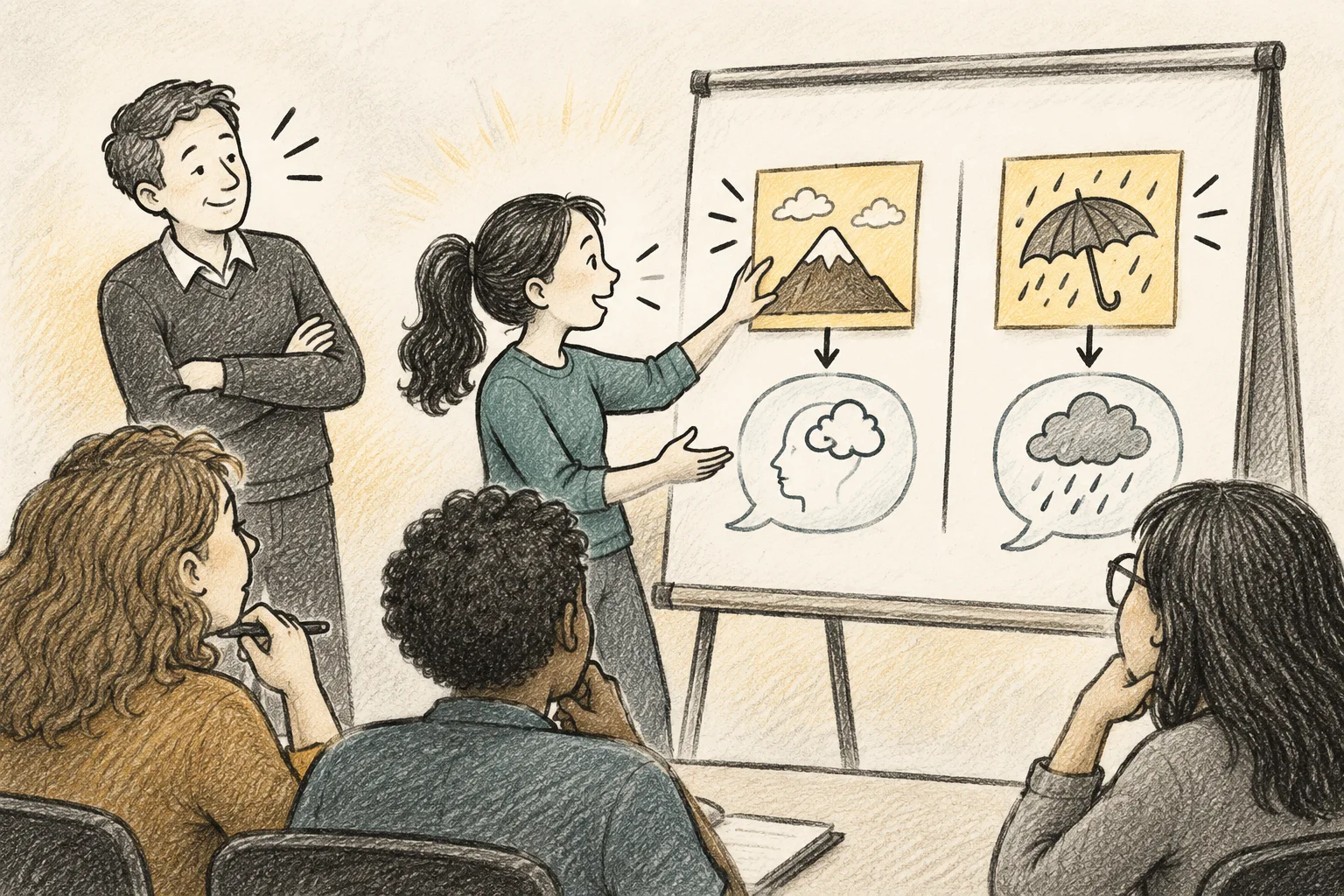
An audience can enjoy a talk and leave unable to use its argument. People can also agree with the speaker for the same reasons they previously agreed with a religious authority: confidence, group approval, and the relief of receiving an answer. A workshop needs to give the learner something to do with the reasoning.
Start with a narrow goal. By the end, participants should be able to identify a claim, distinguish an experience from its explanation, name an alternative, and say what evidence would change their confidence. Those abilities can be demonstrated on a new example. “The audience liked us” measures something else.
Research on critical-thinking instruction and lateral reading supports making reasoning practices explicit and giving learners opportunities to use them. The studies in our research notes concern particular educational settings and methods. This Room for Why curriculum is a new program that still needs its own evaluation. Research notes 5 and 6
Prepare the room and the material
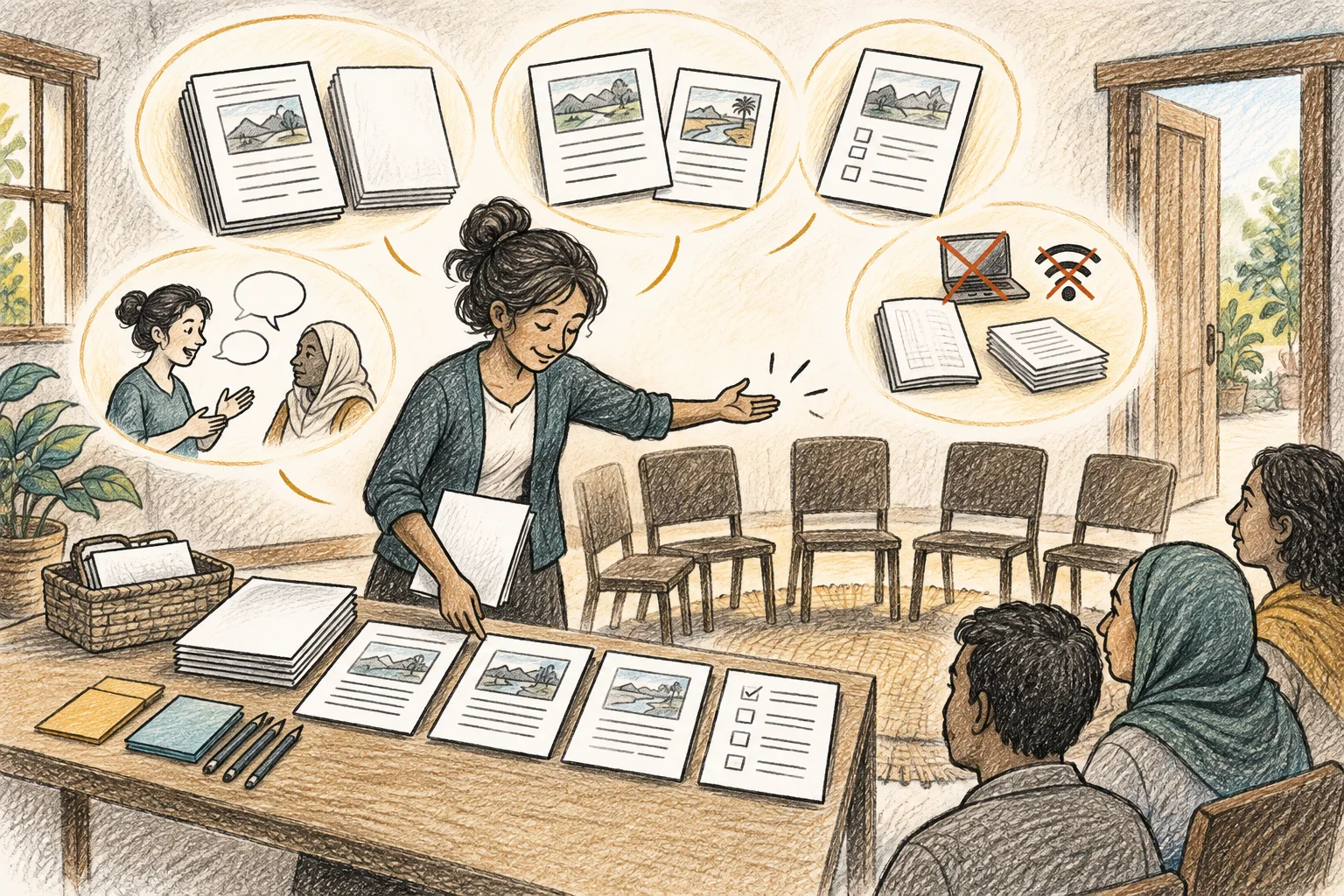
For a small adult session, bring the relevant lecture, blank paper or the claim worksheet, a written example, a second example for practice, and a final example for assessment. Make the materials usable without a projector or internet connection. Choose a local language and review the examples with the host beforehand.
Explain your humanist position at the beginning. Tell participants what they will do and that they can pass on an exercise or leave. Let them use hypothetical claims instead of disclosing private beliefs. Have a way to receive criticism that does not require confronting the facilitator in front of the group.
The facilitator should be able to explain each example without relying on a quotation from an expert. Sources support the explanation; they do not replace understanding it. Practice the lesson aloud, especially the transition from the claim to the missing evidence. If you cannot explain that step, revise the lesson before teaching it.
A complete 90-minute session
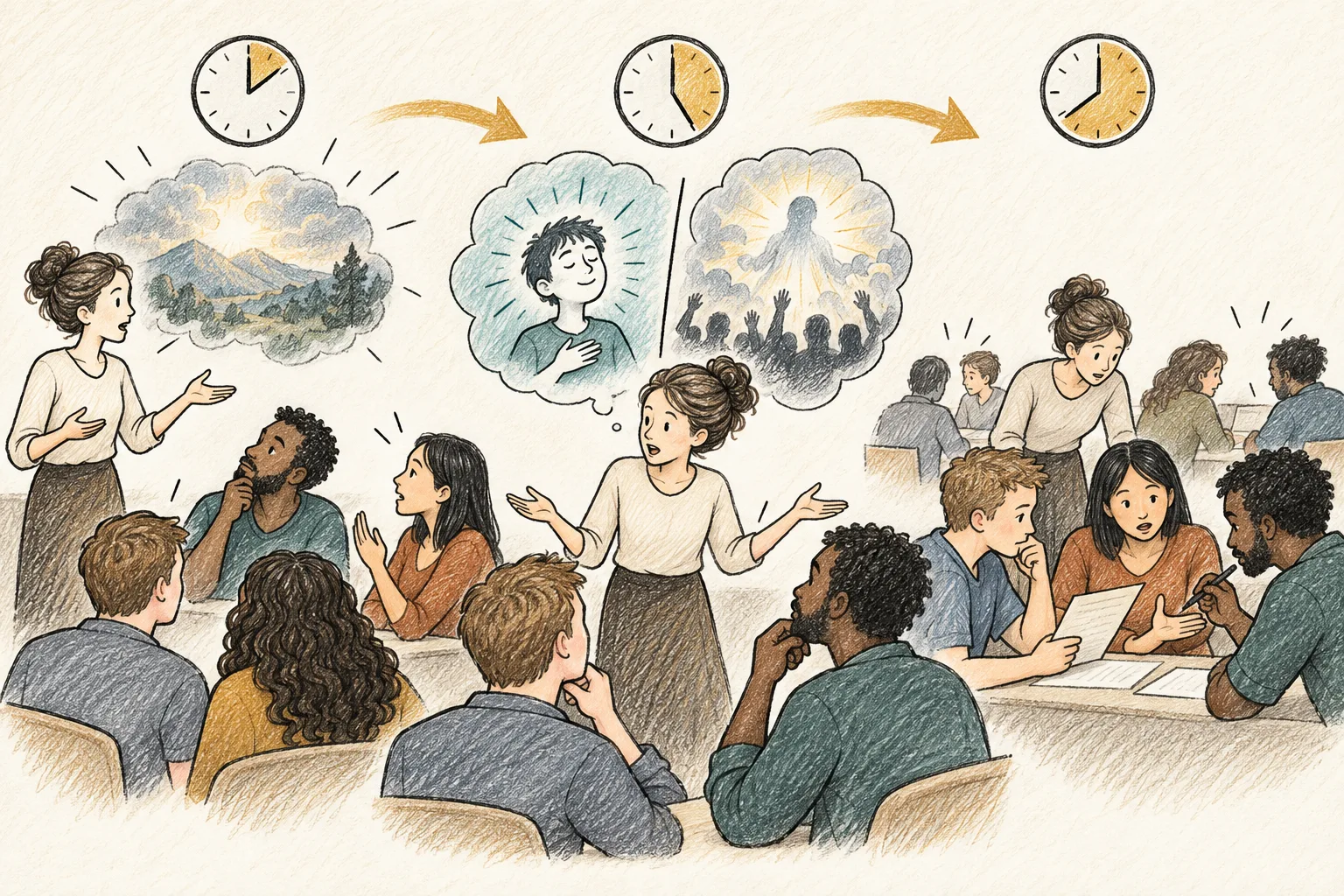
Minutes 0–10: introduce the purpose, participation choices, and one opening prompt. Ask, “What makes a claim worth trusting?” Collect a few answers without grading people's identities. Write down a claim the group can examine together, or use the prepared hypothetical example.
Minutes 10–25: teach the distinction between an experience and an explanation. Use: “I felt peaceful during the event, so the organizer's supernatural claim must be true.” Ask participants to identify what was observed and what was inferred. Develop at least two alternative explanations together.
Minutes 25–45: work through the evidence. Ask what records would help, who could check them, and what a failure would look like. Show how a claim becomes protected if every possible outcome is counted as support. Give the group enough time to explain the missing step in their own words.
Minutes 45–65: practice in pairs or small groups. Use a new claim: “Many successful people use this ritual, so the ritual causes success.” Ask for the claim, an alternative, a comparison that would matter, and a finding that would lower confidence. Participants can work alone or pass.
Minutes 65–80: try a fresh example individually. Use: “Three websites report the same miracle, so we have three independent confirmations.” Ask what must be checked before accepting that conclusion. Do not reuse the facilitator's solved example and mistake memory for transfer.
Minutes 80–90: compare approaches, invite criticism, and offer the lectures and worksheet to take away. Ask participants which part they could use later and which part needs a better explanation. End with the question they want to investigate next.
Give useful feedback
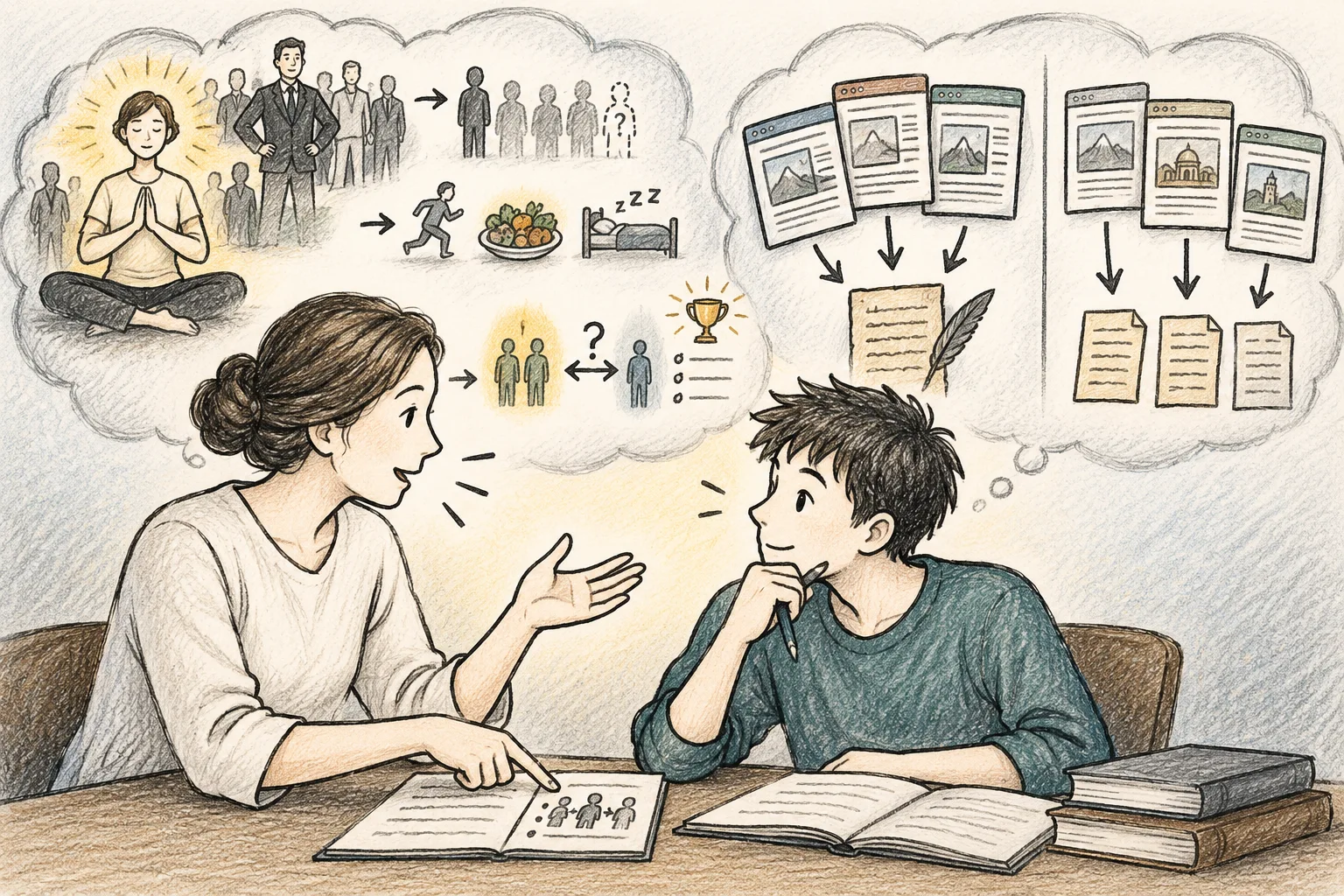
For the ritual example, a strong response might identify selection effects: perhaps successful people are more visible, unsuccessful users are missing, or other habits explain the outcome. It would ask for a fair comparison and a definition of success. An answer that merely says “religion is wrong” has skipped the reasoning task.
For the three-websites example, a strong response checks whether all three cite the same original story. It distinguishes three repetitions from three independently documented observations. It also asks about the original record's quality. The conclusion may remain uncertain after the check. That can be an accurate result.
Use a simple scoring guide with four dimensions: a clear claim; a relevant alternative; appropriate evidence or a test; and a stated condition for revision. Give 0 for absent, 1 for partial, and 2 for clear on each dimension. This is a proposed classroom rubric. It needs review and consistent use before scores can support stronger conclusions.
Measure what happened honestly
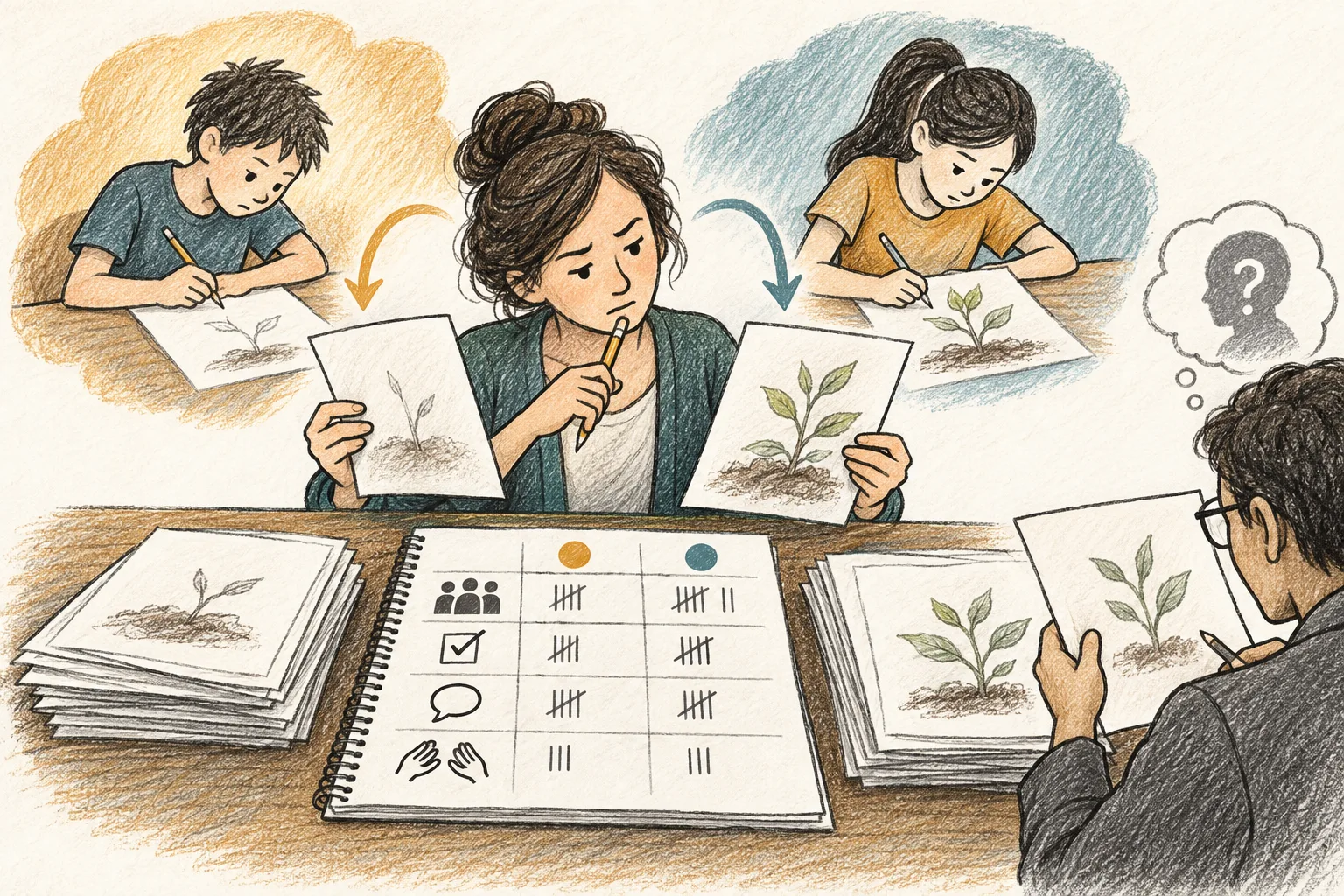
For a pilot, use comparable but different tasks before and after instruction. Record how many people participated, how many completed each task, what language was used, and what assistance they received. If possible, have a second reviewer score a sample without knowing whether it came from before or after the session.
A score change can be encouraging while still leaving explanations open, including practice, selective completion, and differences between tasks. An optional later follow-up can ask whether participants retained the skill. Stronger causal claims require an appropriate comparison design and careful handling of those alternative explanations.
Confidence alone is a poor outcome measure. Metacognitive research distinguishes how sure someone feels from how well they perform. A workshop that makes people louder without making their reasoning better has missed the point. Research note 3
Publish limitations alongside results. Do not turn attendance, praise, or agreement with humanism into proof of educational effectiveness. Report what the participants could actually demonstrate and what changed in the next version of the teaching.
Final exercise and discussion
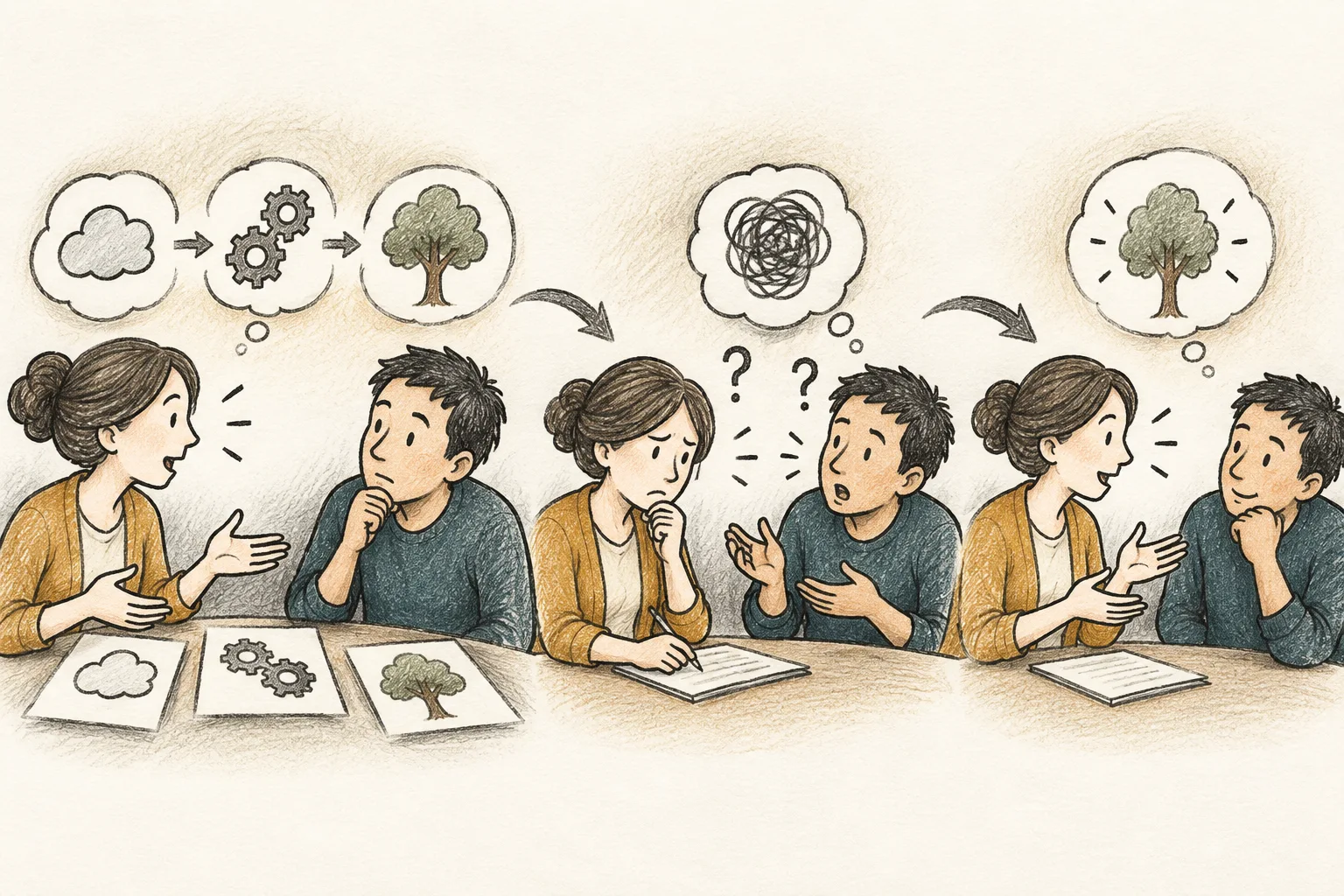
Teach a ten-minute segment to a willing partner. Use a claim, explain one reasoning move, and give them a new example. Ask them to tell you where your explanation became unclear. Revise that part and try again.
Then draft a one-page field report using only what occurred: purpose, setting, material, participation, observations, feedback, costs if relevant, and next revision. Leave out a success story you cannot support. The mission becomes credible when the same demand for evidence governs what we teach, how we work, and what we claim afterward.