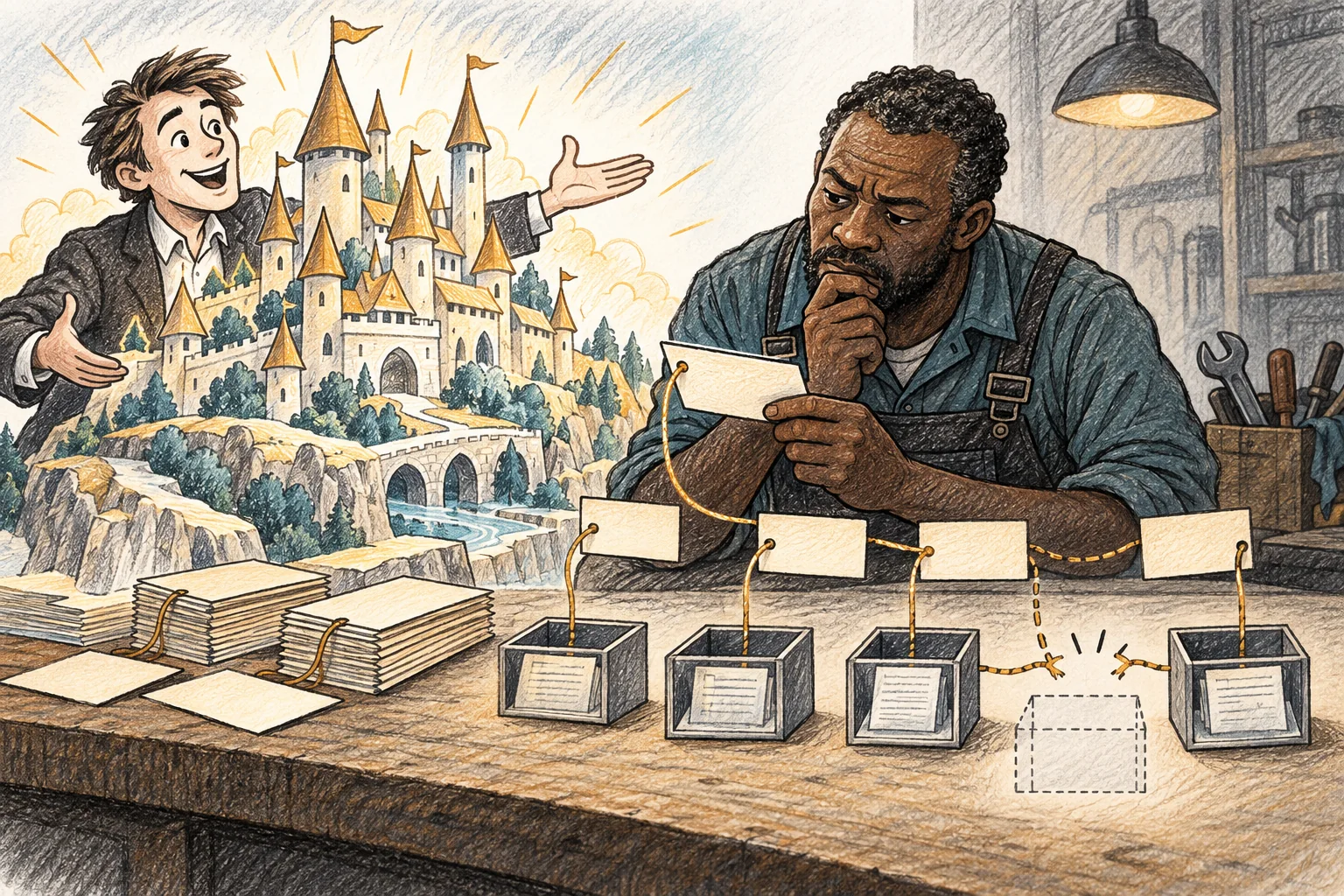
Make the claim stand still

A persuasive speaker can move between several claims before you have examined the first one. “This community helps people” becomes “its teaching is true,” which becomes “its leaders deserve your obedience.” Those are separate steps. Each needs its own support. Start by writing the exact claim you are being asked to accept.
Ask what kind of claim it is. “This event happened” calls for historical evidence. “This practice causes an improvement” calls for a causal comparison. “This action is wrong” calls for reasons about values and consequences. “This explanation is beyond any possible observation” creates a different problem: what could establish it? These categories help you choose a method instead of letting confidence substitute for one.
A speaker may retreat from a precise claim when challenged. “This prayer reliably heals disease” becomes “prayer gives people hope.” Hope deserves its own discussion, but the original claim was about healing. Keep a written record of what changed. Otherwise a weaker claim can quietly take the place of the stronger one while retaining its persuasive force.
Trace the evidence to its origin

Five websites repeating one story are five copies of one story. To evaluate it, find the original record. Who observed the event? When was it recorded? Was the record created before the outcome was known? What information is missing? Are the accounts independent, or do they depend on one source?
For a study, identify the participants, the comparison, and the measured outcome. A change in self-reported confidence is a different result from improved accuracy. A short experiment is a different kind of evidence from a long-term follow-up. An association between two things leaves questions about what causes what. These distinctions keep a source from being asked to support more than it measured. Research note 7
Researchers have taught students to investigate who is behind a source by checking outside the source's own pages, a practice called lateral reading. The underlying habit is useful here: a polished account of itself is not an independent reputation check. Find the original evidence and see how knowledgeable outsiders evaluate it. Research note 5
Watch the missing step

Consider this argument: “If my religion were true, prayer would bring peace. Prayer brings peace. Therefore my religion is true.” The conclusion does not follow from those premises because other causes could also produce peace. This pattern is called affirming the consequent. The practical question is what evidence distinguishes the proposed cause from alternatives.
Now consider circular authority: “This text is reliable because God inspired it. We know God inspired it because the text says so.” The evidence has returned to the claim it was supposed to establish. Ask for support that does not depend on already accepting the conclusion.
Another common move is to transfer the burden: “You can't prove this never happened, so you should believe it.” A lack of disproof can leave a question open. It cannot establish every incompatible story someone could invent. The person advancing a factual claim owes reasons for that claim.
A label alone does little work. Saying “fallacy” is useful only if you can show the missing step. Explain the problem in ordinary language and invite the speaker to supply the support. If they do, examine it. Reasoning should create a route for correction.
Put impressive numbers in context
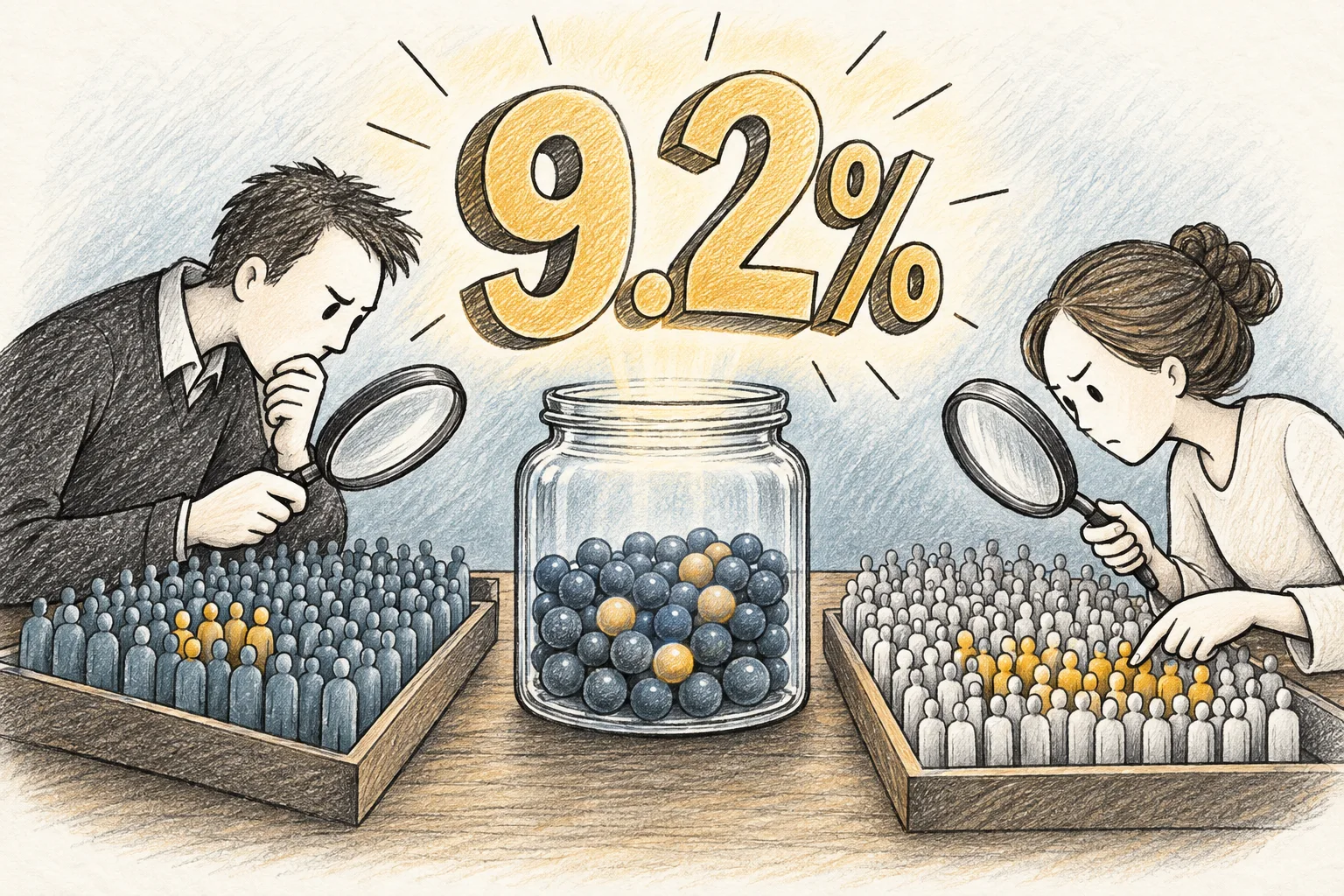
Use a fictional screening test to see how base rates matter. Suppose 10 of 1,000 people have a condition. The test finds all 10, but it also gives a positive result to 99 of the 990 people without it. That produces 109 positive results. Only 10 of those positives identify the condition, about 9.2 percent.
The test caught every real case in this example, yet a positive result was usually a false alarm. A headline about detection accuracy could conceal that. You needed the frequency of the condition, the false-positive rate, and the question you were trying to answer.
Bring the same discipline to a miracle claim. “The chance was tiny” needs a specified event, a defensible probability model, and a count of opportunities. If someone searched thousands of stories for an unusual coincidence, the chance calculation cannot pretend they made one prediction in advance. Ask what was predicted before the outcome and what would have counted as failure.
Exercise: audit one argument

Use the claim worksheet. Write the claim, its strongest available evidence, a competing explanation, and a finding that would change your mind. Then write the next practical step: obtain the full report, check the recording, look for an independent account, or identify what cannot currently be verified.
Work through this hypothetical statement: “Everyone who attended our event felt better, so our supernatural explanation is correct.” First ask how “everyone” was measured and who was missing. Then ask what else happened at the event. Finally, identify the leap from an emotional outcome to a supernatural explanation. A good answer can acknowledge an observed benefit while keeping the additional claim visible.
Discuss and carry forward

What would make an account more trustworthy even if you disliked its conclusion? Give an answer you would also accept when it supports your own position. The next lecture applies that standard to scientific evidence and sacred claims about the physical world.